I've handled dozens of customer complaints over the past few years, and here's what surprises me: most problems aren't about broken cups or wrong colors. They're about buyers choosing suppliers who seemed perfect during the quote stage but couldn't deliver when it mattered. The good news? These failures follow predictable patterns, and you can spot the warning signs before you wire that deposit.
Most drinkware supplier failures trace back to three disconnects: what the supplier promises during sampling versus what their production line can consistently deliver, hidden costs that appear only after you've committed, and delivery timelines built on optimism rather than verified capacity. Buyers who cross-check claims with tangible evidence during the inquiry stage avoid 90% of these problems.
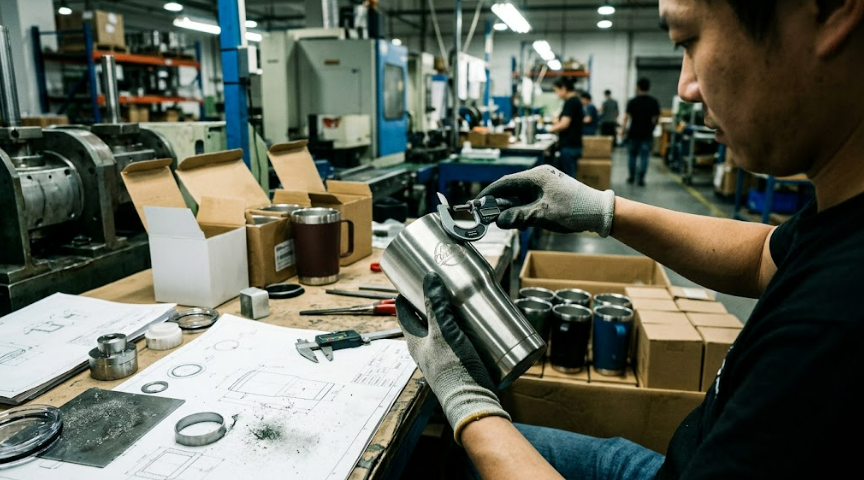
You're probably comparing quotes right now, and two suppliers look equally good on paper. Let me show you what to dig into before you decide.
What key factors should you consider?
You've got three quotes in front of you, all within 10% of each other on price. This is where most buyers make their choice based on gut feeling or whoever replied fastest.
The factors that predict supplier reliability aren't price or response speed—they're verifiable production capacity, transparent cost structures, and documented quality systems you can inspect before ordering.
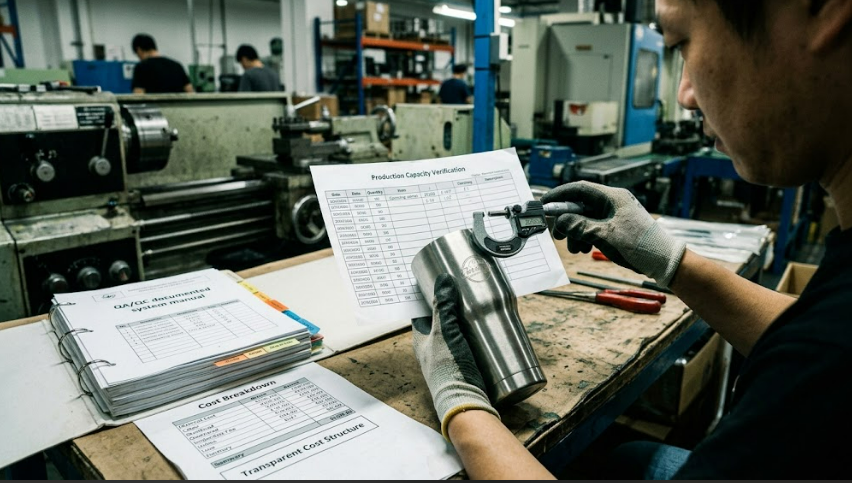
Here's what actually matters:
Production capacity versus your timeline. Ask how many other orders are in their queue. A supplier who says "no problem" to your 10,000-piece order with 20-day delivery but won't show you their production schedule? That's a red flag I've seen turn into 45-day delays.
Cost breakdown transparency. Request an itemized quote: per-unit cost, mold fees, packaging, shipping estimates. Vague total prices hide surprises. I've seen customers get quoted $2.50/unit, then discover $800 in mold charges and $0.40/unit "export packaging fees" later.
QC system documentation. Don't just ask "do you have quality control?" Ask for sample QC reports from recent orders. Suppliers with actual systems will send you templated inspection sheets. Others will go silent or send generic certificates.
Your order size versus their minimum. If their MOQ is 500 pieces but you need 5,000, you're in their sweet spot. If their MOQ is 10,000 and you're stretching to order 1,000? You'll be bottom priority when production gets busy.
How to verify manufacturer's quality?
This is where sample-to-bulk disasters happen. You approved a gorgeous sample, then the bulk order arrives with rough edges and misaligned prints.
Quality verification isn't about trusting the sample—it's about checking whether the supplier's bulk production uses the same process and attention level as their sample department.
Request these specific items during inquiry:
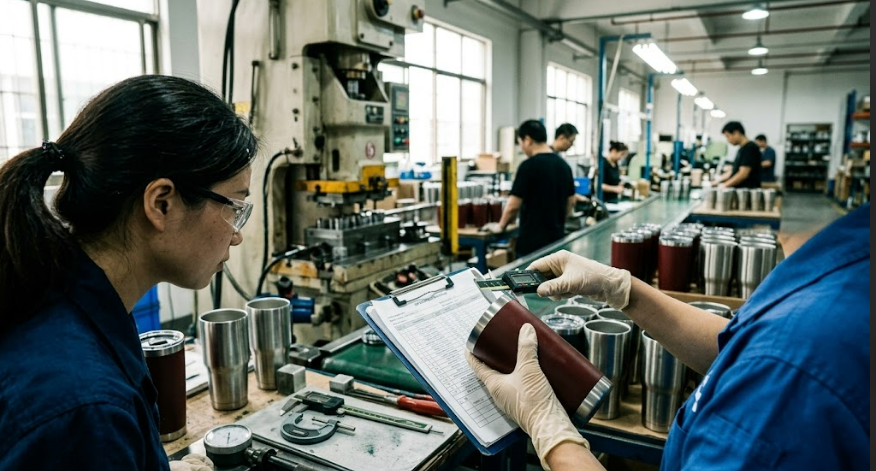
Bulk production photos from recent orders. Not just glamour shots—ask for images showing their actual production line mid-run. You're looking for consistency: are the workstations organized, do they use fixtures for printing, is there in-process inspection?
Access to their QC checkpoint process. Reliable suppliers inspect at multiple stages: incoming material check, post-printing inspection, pre-packaging verification. Ask them to walk you through their checkpoints and show documentation from a recent order.
Pre-shipment inspection offer. Tell them you want to arrange third-party inspection before shipment. If they hesitate or push back, that's your answer. Good suppliers welcome it because they've already checked everything.
Reference customers in your market. Not testimonials—actual company names you can look up. European and American buyers working with the same supplier means they've passed basic compliance and delivery expectations.
One verification trick that's saved my customers money: ask for photos of rejected items from their latest batch. If they can show you what they caught and removed, they're actually inspecting. If they claim zero defects ever? Walk away.
What certifications should you look for?
Certifications confuse people because suppliers list everything they've ever touched. Here's what matters for drinkware going to European and American markets.
The certifications that actually protect your business are FDA approval for materials contacting beverages, LFGB compliance for European food contact items, and third-party factory audits like BSCI or Sedex that verify working conditions and manufacturing standards.
For glass, ceramic, and stainless steel drinkware:
FDA certification for materials and coatings. This isn't optional for US market—it confirms the cup won't leach chemicals into drinks.
LFGB compliance if you're selling in Europe. It's stricter than FDA on certain materials. German buyers specifically ask for this.
Factory audit reports (BSCI, Sedex, or similar). These aren't product certifications—they verify the factory operates ethically and maintains quality systems. Big retailers require them.
What you DON'T need: generic "ISO certificate" claims without specific numbers, vague "international standard" references, or quality awards you can't independently verify.
Here's the critical part: ask for certificate numbers and issuing dates. Real certifications can be looked up on the issuing body's website. If the supplier hesitates to share full certificate details, they probably don't have them or they're expired.
Frequently Asked Questions
How can I verify a supplier's production capacity?
Ask for their monthly output numbers for your specific product type, then request a production schedule showing current orders. Cross-reference the timeline they promised you against their stated capacity. If the math doesn't work, they're overcommitting.
Should I always choose the lowest price quote?
No. The lowest quote often omits costs that appear later—mold fees, special packaging, or rush production charges. Request fully itemized quotes from all suppliers and compare line-by-line. A slightly higher transparent quote beats a low quote with hidden fees.
What's a reasonable delivery timeline for custom drinkware?
For 1,000-5,000 pieces with simple customization: 25-35 days from deposit to shipment. Anything under 20 days means they're either rushing (quality risk) or have pre-made inventory (customization limitations). Over 45 days suggests capacity issues.
How many samples should I request before placing an order?
Request 2-3 samples that match your exact specifications—not stock samples. This tests whether they can execute your customization accurately. If the samples vary significantly from each other, their production consistency is questionable.
Can I negotiate minimum order quantities?
Yes, especially if you're planning repeat orders. Suppliers with lower MOQs (500-1,000 pieces for us) value long-term relationships over single large orders. Be upfront about your reorder potential—it's better leverage than one-time volume promises.
Conclusion
Supplier selection isn't about finding the cheapest quote or the fastest reply. It's about matching their verified capabilities to your actual needs. Check their production capacity against your timeline, demand cost transparency before committing, and verify their quality systems through documentation rather than promises. The suppliers who welcome verification questions are the ones who'll deliver what they promised.
Ready to start your drinkware project with a supplier who checks these boxes? Reach out to discuss your specific requirements—we'll show you our production schedule, share recent QC reports, and provide transparent pricing before you make any commitments.