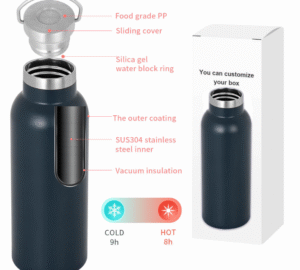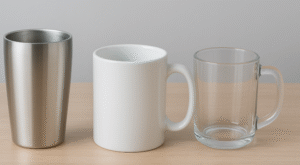
Your expensive coffee goes cold in minutes. Or worse, it picks up a weird, metallic taste from your travel mug. You just want to enjoy your brew exactly as you intended.
The best material for coffee is ceramic, as its inert, glazed surface preserves the coffee's pure flavor. For keeping coffee hot for hours, insulated stainless steel is unbeatable. Glass is a great choice for appreciating the coffee's color and aroma without affecting taste.

As a person who has spent years developing drinkware, I've seen how much the right mug matters. It’s not just a container; it's part of the coffee experience. Consumers today are smarter than ever. They care about safety, but they also want a mug that fits their lifestyle, whether they're rushing to work or enjoying a quiet morning. The "best" material isn't a simple answer. It's a balance between taste, temperature, and how you live your life. Let's break down which material truly fits your needs as a coffee lover.
What material is best for coffee mugs?
You walk down the aisle and see ceramic, glass, steel, and even plastic. It's overwhelming. You just want to know which material will give you the best coffee experience every day.
Ceramic is the best all-around material for coffee mugs due to its neutral flavor profile and vast design options. Stainless steel is superior for durability and heat retention, while glass is excellent for visual appeal and purity.

I always tell my clients that the material defines the mug's purpose. When a brand wants to create the perfect at-home coffee mug, we almost always start with ceramic. It's the traditional choice for a reason. But if they're targeting commuters or outdoor enthusiasts, the conversation immediately shifts to stainless steel. Understanding the core strengths of each material is key to making the right choice, both for a brand and for you as a coffee drinker. Each material serves a different master.
A Deeper Look at the Top Contenders
Let’s break down the pros and cons in a way that helps you decide. For years, I've used this simple framework to guide product developers like Emily.
| Material | Best For | Key Advantage(s) | Downside(s) |
|---|---|---|---|
| Ceramic | Daily home or office use, flavor purists | Neutral taste, great feel, endless designs | Poor heat retention, fragile |
| Stainless Steel | Commuting, travel, keeping coffee hot for hours | Excellent insulation, extremely durable | Can sometimes impart a metallic taste |
| Glass | Coffee tasting, pour-overs, aesthetic appeal | Totally inert flavor, lets you see the coffee | Fragile, poor insulation (unless double-walled) |
| Plastic | Budget-friendly, camping, kids' use | Lightweight, durable, inexpensive | Can absorb odors/stains, potential for BPA |
My personal insight is that the "best" material is the one that solves your biggest problem. If your coffee always gets cold, the answer is stainless steel. If you hate any hint of a foreign taste, stick with ceramic or glass.
What kind of mug does coffee taste best in?
You've perfected your brewing method, but something is still off. You take a sip and taste the mug, not the coffee. That subtle metallic or earthy flavor is ruining your perfect cup.
Coffee tastes best in a mug made from a neutral, non-porous material. High-quality, fully glazed ceramic and glass are the top choices because they do not absorb or impart any unwanted flavors into your drink.

Flavor integrity is everything. I once worked with a brand that wanted to save costs by using a lower grade of stainless steel. The samples came back, and the metallic taste was undeniable. We immediately switched to food-grade 18/8 stainless steel. The extra cost was minimal compared to the cost of unhappy customers. This experience taught me that when it comes to taste, you cannot compromise. The material must be a silent partner to the coffee, never the main event.
Why Material Affects Flavor
The chemistry between your mug and your coffee is real. Here's what's happening:
- Ceramic's Secret: A good ceramic mug is coated in a hard, smooth glaze. This glaze acts as a barrier, making the surface non-porous and inert. It doesn't react with the acids in coffee and doesn't absorb oils or flavors from past brews. This is why coffee from a clean ceramic mug tastes so pure.
- The Purity of Glass: Glass is naturally non-porous. It's a completely inert material, meaning there is zero chemical reaction with your coffee. This is why professional coffee tasters, or "cuppers," often use glass vessels. It provides the most unadulterated taste and aroma experience.
- The Risk with Metal and Plastic: Stainless steel is largely non-reactive, but some people are sensitive to a faint metallic taste, especially with very hot or acidic coffee. Lower-quality metals are worse. Plastic is porous and can absorb oils and flavors over time, leading to a "muddy" taste in your coffee.
For the absolute best taste, a high-quality ceramic mug is your most reliable choice.
Is ceramic or stainless steel better for coffee?
You need a mug that works for your life. But you're torn between the classic feel of ceramic and the unbeatable performance of stainless steel. You want to know which one really wins.
Ceramic is better for taste purity and the traditional at-home experience. Stainless steel is far better for heat retention, durability, and travel. Your choice depends on whether you prioritize flavor or function.
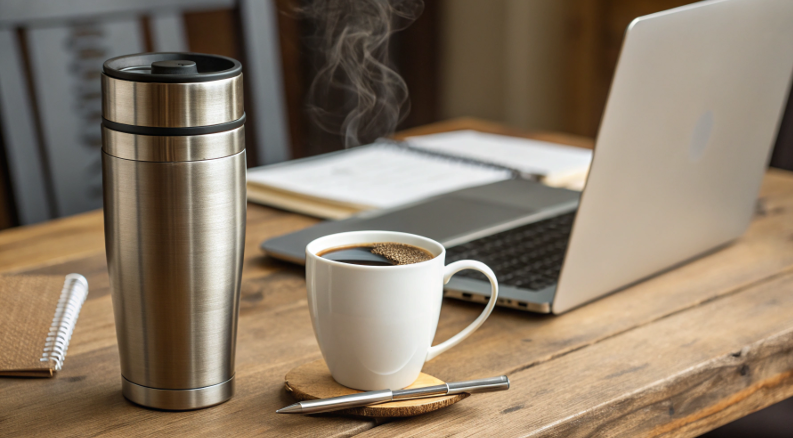
This is the most common question I get from brands. The answer almost always comes down to the intended use case. For a brand focused on cozy, at-home lifestyle products, we develop beautiful, ergonomic ceramic mugs. For a company targeting the busy professional or outdoor adventurer, an insulated stainless steel tumbler is the only logical choice. There is no single "better" option; there is only the better option for a specific moment. Think about when and where you drink your coffee most often.
A Head-to-Head Comparison
Let's put them side-by-side to make the decision easier.
Choose Ceramic if:
- You primarily drink coffee at home or at your desk.
- You are a flavor purist and cannot stand any hint of a metallic taste.
- You enjoy the comforting weight and feel of a traditional mug.
- You want a wide variety of colors, shapes, and artistic designs.
Choose Stainless Steel if:
- You need your coffee to stay hot for several hours.
- You commute or travel and need a spill-proof, durable lid.
- You are clumsy or have kids around; you need something that won't break.
- You want one versatile mug for both hot coffee and iced drinks.
I use a ceramic mug for my first cup of the day at home. But the second I walk out the door, I pour my coffee into an insulated stainless steel tumbler. They solve different problems for me, and both are essential.
What is the healthiest mug for coffee?
You're careful about the food you eat and the water you drink. Now you're wondering if your coffee mug is safe. You want to be sure no harmful chemicals are leaching into your morning brew.
The healthiest mug materials are glass and lead-free ceramic. Glass is completely inert and non-toxic. High-quality ceramic from a reputable source is coated in a stable, lead-free glaze, making it perfectly safe for hot beverages like coffee.
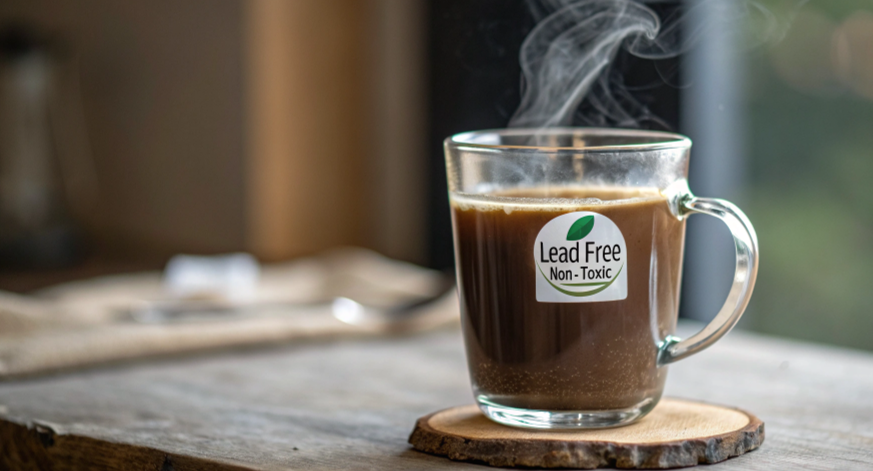
Safety is the foundation of my business. We rigorously test every batch of products to ensure they meet international standards like FDA and California Prop 65. The biggest concern historically with ceramic has been the potential for lead in the glaze, especially in older or handmade mugs from unregulated sources. This is why I stress the importance of buying from reputable brands. A trustworthy manufacturer will always use lead-free, food-safe glazes.
Your Checklist for a Healthy Mug
When you're choosing a mug, your health should be a top priority.
- Glass is the Safest Bet: If you have any doubts, choose glass. Materials like borosilicate glass are not only inert and pure but also resistant to thermal shock, so they won't crack when you pour in hot coffee.
- Look for Lead-Free Ceramic: Modern, commercially-produced ceramic mugs from established brands are overwhelmingly safe. They are required by law in many countries to be lead-free. Avoid very old, antique, or hand-painted mugs from unknown origins for daily use.
- Choose High-Grade Stainless Steel: Opt for 18/8 or 304 food-grade stainless steel. This ensures the metal is stable, corrosion-resistant, and won't leach harmful substances into your coffee.
- Be Cautious with Plastic: If you must use plastic, ensure it is certified BPA-free. Also, avoid microwaving coffee in plastic mugs, as heat can accelerate the breakdown of the material.
Your daily coffee ritual should be a source of pleasure, not a health concern. Choosing a mug made from glass or certified lead-free ceramic provides that peace of mind.
Conclusion
The best coffee mug is personal. Choose ceramic for pure taste at home, and insulated stainless steel for lasting heat on the go. Prioritize your daily needs to find your perfect match.