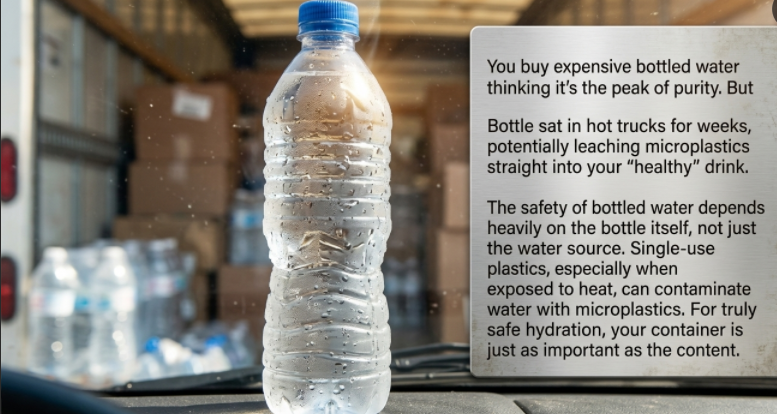
You buy expensive bottled water thinking it's the peak of purity. But that bottle sat in hot trucks for weeks, potentially leaching microplastics straight into your "healthy" drink.
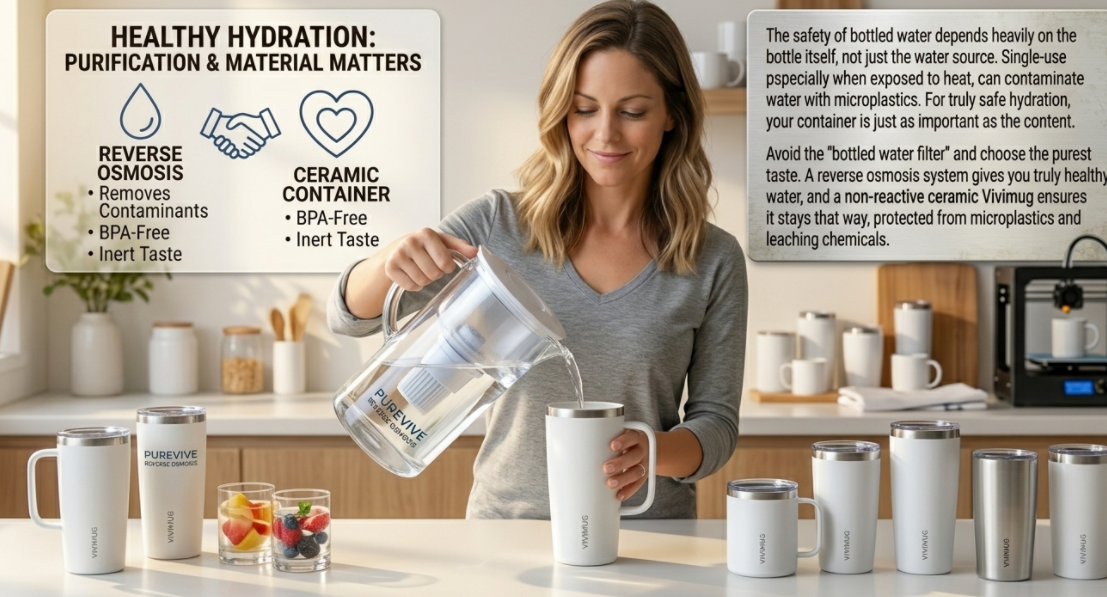
The safety of bottled water depends heavily on the bottle itself, not just the water source. Single-use plastics, especially when exposed to heat, can contaminate water with microplastics. For truly safe hydration, your container is just as important as the content.
To be honest, I used to be just like everyone else—I figured 'water is just water,' right? I’d grab whatever bottled water was on sale, assuming it was perfectly healthy. But after diving deep into the world of manufacturing, I had a real wake-up moment. We spend so much time and money choosing premium water, yet we completely ignore the plastic bottle it’s sitting in. Now, I hope this guide helps you look past the hype and find a hydration routine that’s actually as clean as it claims to be.
Ranking the Healthiest Bottled Water: What do the labels fail to tell you?
You're in the water aisle, confused by labels like "artesian" and "spring." These terms feel healthy, but you suspect it's just marketing, leaving you unsure of what's best.
The healthiest water isn't defined by marketing terms. Instead, check the source information and purification method, like reverse osmosis. But remember this: every single-use plastic bottle, no matter the water inside, carries a risk of microplastic contamination from the packaging itself.
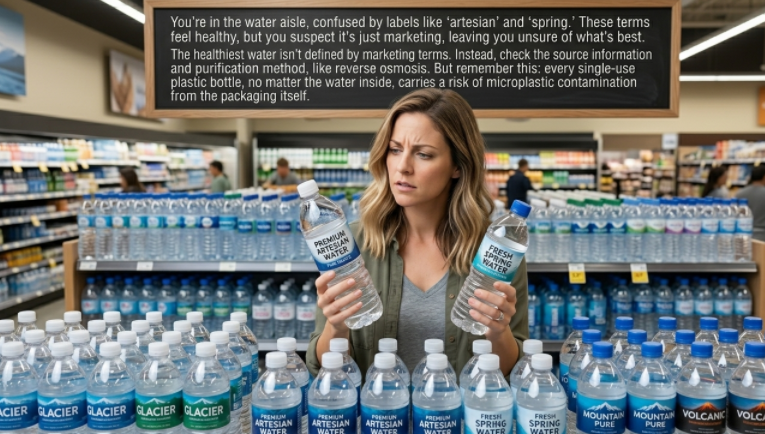
I used to fall for the pretty mountain labels every time. But then I learned the words on the front don't tell the whole story. The real information is in the fine print on the back, or often, not there at all. For a product designer like Emma, details matter, and the same is true for water. "Spring water" just means it came from an underground source, but it doesn't guarantee purity. "Purified water" has been treated, often through reverse osmosis, which is a good sign. But the biggest thing labels never mention is the journey of the bottle itself. That plastic container is the variable that can undo all the benefits of the pure water inside.
Understanding Water Designations
| Water Type | What It Really Means |
|---|---|
| Spring Water | Sourced from an underground formation from which water flows naturally to the surface. |
| Artesian Water | Sourced from a well that taps a confined aquifer in which the water level stands at some height above the top of the aquifer. |
| Purified Water | Water that has been treated by distillation, deionization, or reverse osmosis. The source can be anything, including tap water. |
| Mineral Water | Contains a specific amount of dissolved mineral solids. The mineral content cannot be added. |
Plastic vs. Ceramic: Why does your choice of water bottle materials matter?
You want to be healthy, but your water tastes a little like plastic. Your reusable bottle might be leaching chemicals or holding onto old flavors, ruining your pure water.
Your bottle's material directly impacts your health and the water's taste. Plastic can leach chemicals and retain odors. Ceramic and glass are non-reactive, offering the purest taste. Stainless steel is durable, but ceramic provides a completely inert and clean experience.
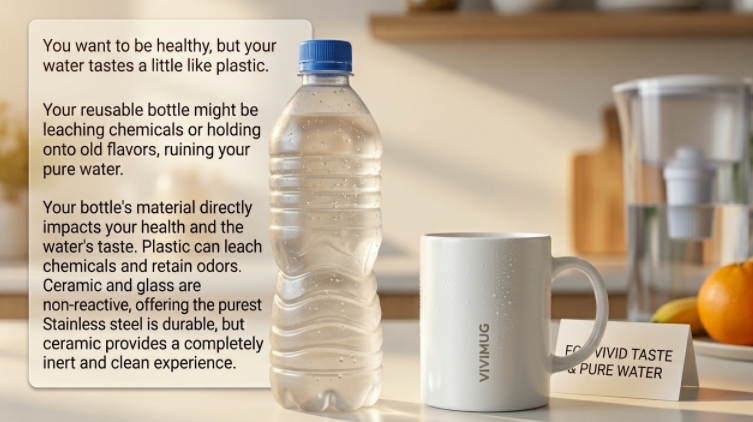
My "wake-up moment" wasn't just about single-use bottles. It made me rethink everything. It’s like buying the most expensive, organic coffee beans and then brewing them in a dirty old pot. Why would we do that with our water? Switching to a high-quality ceramic mug wasn't just about being eco-friendly for me; it was about finally being able to taste the water, not the packaging. Ceramic is completely inert. It doesn’t hold onto the taste of yesterday's coffee or leach anything into your drink. It delivers water exactly as it should be: clean and pure. For my clients creating high-end promotional products, I always emphasize this. The material sends a message. A ceramic tumbler says, "We care about quality and your well-being." It protects the user's health and the brand's premium image.
Comparing Common Bottle Materials (healthiest bottled water)
| Material | Purity of Taste | Health Safety | Durability |
|---|---|---|---|
| Plastic (PET/Tritan) | Poor (can retain odors) | Low (risk of leaching) | Varies |
| Glass | Excellent | High (if lead-free) | Low (breakable) |
| Stainless Steel | Good (can have metallic taste) | High (food-grade) | Excellent |
| Ceramic | Excellent (purest taste) | Highest (inert material) | Good (can chip/break) |
Beyond the Bottle: How can you maintain the purest taste for every sip?
You bought a great new reusable bottle, but now it has a strange smell. If not cleaned well, it can build up bacteria and biofilm, making your water taste awful.
To maintain the purest taste, rinse your bottle daily and deep clean it weekly. Use a bottle brush and soap for regular washes. For a deep clean, a mix of baking soda and vinegar will remove buildup and ensure every sip is fresh and clean.
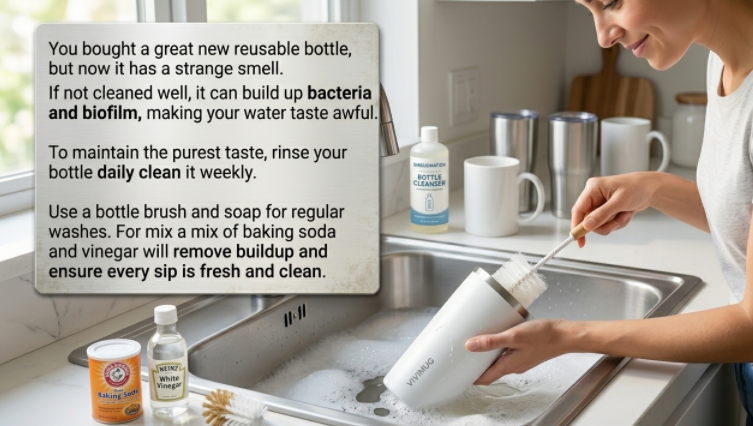
In my factory days, we learned that cleaning and maintenance are just as critical as the manufacturing process itself. You can have a perfectly crafted tumbler, but if it's not cared for, its quality is lost. The same is true for your personal water bottle. It's a simple habit that makes a world of difference. Giving it a quick rinse with hot water at the end of the day stops things from building up. Then, once a week, give it a proper scrub. I personally like using a simple paste of baking soda and a little water. It acts as a gentle abrasive to scrub away any film without scratching the inside of the bottle. Then I rinse it with a bit of white vinegar to sanitize it. It's a cheap, non-toxic way to keep my tumblers and mugs in perfect condition.
Simple Steps for a Deep Clean
- Disassemble: Take the bottle apart. Remove the lid, straw, and any silicone seals.
- Scrub: Use a bottle brush and mild dish soap to scrub all interior surfaces, including threads.
- Sanitize: Fill the bottle with a solution of either one part white vinegar to four parts water, or a tablespoon of baking soda in warm water. Let it sit for 15 minutes.
- Rinse & Dry: Rinse all parts thoroughly with hot water and let them air dry completely before reassembling.
Conclusion
True hydration is about the container as much as the water. Choose a bottle made from a clean material, and keep it clean, to ensure every sip you take is pure.