You're tired of fleeting home decor trends that look dated in a year. You want a style that feels both fresh and timeless, but finding that perfect piece seems impossible.
Milk glass is an opaque or translucent glass, most famously in white, that is regaining popularity for its versatility. It blends minimalist charm with vintage nostalgia, making it the perfect accent piece for any modern home seeking character and a soft, clean aesthetic.

For years, my world has been about applying vibrant colors and designs onto surfaces like tumblers and mugs. I'm always looking at the "next big thing" in materials. Recently, I've seen a surge in requests for a "milk glass look" on modern drinkware. It got me thinking about the real thing I remembered from my grandmother's house. It's fascinating to see this classic material, once seen as old-fashioned, now being sought after by a new generation. It’s a testament to how good design never truly goes out of style; it just waits for its moment to shine again.
How Can You Tell if Something Is Milk Glass?
You spot a beautiful white vase at a thrift store. You love the style, but you hesitate. Is it genuine, collectible milk glass or just a cheap piece of painted glass?
Hold the piece up to a strong light. True milk glass will have a faint, translucent glow, often with a subtle reddish halo around the edges known as the "ring of fire." It also feels smoother and denser than painted glass and may have a maker's mark on the bottom.
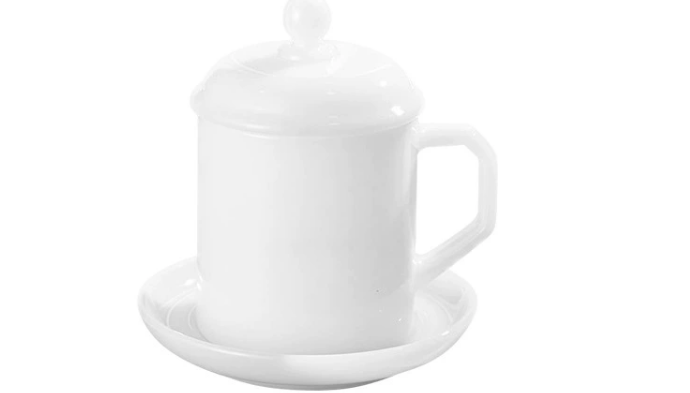
In my line of work, authenticating materials is everything. Trying to sublimate a design onto a poorly coated or painted item is a disaster. The same principle applies here: you need to know what you’re holding. The "ring of fire" is your best clue. When you hold a piece up to a lightbulb, the opaque glass filters the light, and you'll often see that fiery red, orange, or sometimes blueish glow at the thinner edges. This effect is very difficult to fake. Also, run your finger along the surface. Real milk glass is smooth and satiny. If you see any scratches and a different color underneath, it's just painted. Finally, flip it over. Look for marks from famous makers like Westmoreland (a 'WG' monogram), Fenton (an 'F' in an oval), or Anchor Hocking (an anchor symbol).
Milk Glass vs. Painted Glass
| Feature | Genuine Milk Glass | Painted or Coated Glass |
|---|---|---|
| Light Test | Shows a translucent glow, often a "ring of fire". | Opaque, blocks light completely or looks uneven. |
| Surface | Smooth, consistent color through the glass. | Can feel slightly rough; scratches may reveal clear glass. |
| Weight | Feels dense and substantial. | Often feels lighter and less solid. |
| Durability | Color is permanent. | Paint can chip, peel, or fade over time. |
What's So Special About Milk Glass?
You see milk glass everywhere, from antique shops to modern design blogs. It just looks like simple white glass, so you wonder why everyone is so fascinated with it.
Its special quality lies in its chameleon-like versatility and its soft glow. Milk glass fits into any decor, from farmhouse to minimalist, and diffuses light beautifully, creating a warmth that clear glass or ceramic can't replicate. It is both a historical artifact and a timeless design piece.
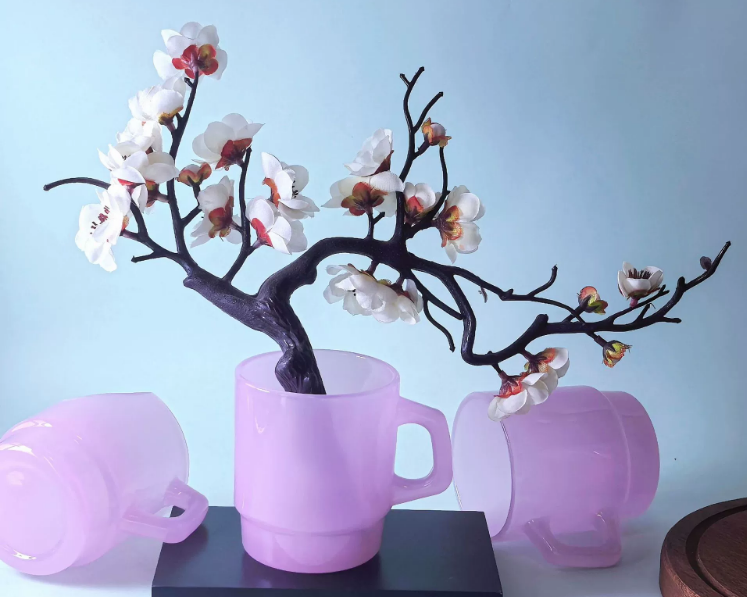
The magic of milk glass is something I came to appreciate when sourcing unique items for my clients. A designer like Emma can use it in any project. Unlike a bold color that defines a room, the soft white of milk glass acts as a perfect, neutral foundation. It makes the colors of the flowers you put in it pop. It doesn't scream for attention; it elegantly enhances its surroundings. But the real secret is how it handles light. Clear glass lets light pass through, and opaque ceramic blocks it completely. Milk glass does something in between—it catches the light and glows from within. This creates a soft, ambient mood in a room that feels incredibly sophisticated. It has a tactile quality too, a smooth, cool-to-the-touch feeling that makes it a pleasure to handle. It's not just an object; it's an experience.
Is Milk Glass Worth Anything Today?
You've inherited a box of your grandmother's old milk glass. You're curious if you are holding onto a valuable treasure or just a collection of sentimental, but worthless, clutter.
Yes, it can be, but value varies wildly. Common, mass-produced pieces from makers like Anchor Hocking might be worth only $5-$20. However, rare, older pieces from Fenton or Westmoreland, especially in colored variations or intricate patterns, can be worth hundreds of dollars to collectors.
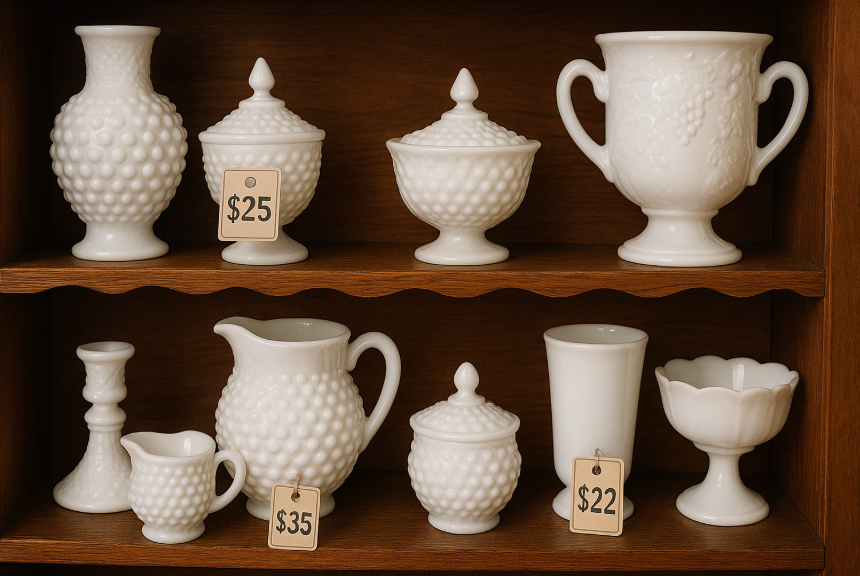
Determining value is a crucial part of my business, whether it's for a vintage item or a new custom product. For milk glass, the value comes down to three things: maker, pattern, and condition. A simple bud vase made by the millions is common and therefore not very valuable monetarily. It's a great, affordable way to get the look. But a large "Hen on Nest" dish made by the Atterbury & Company in the 19th century is extremely rare and valuable. Condition is non-negotiable; any chips or cracks will destroy the collector value. While most milk glass is white, rare colors like turquoise, pink, or the dramatic "black" milk glass are highly sought after. So, while that simple vase might not fund your retirement, a rare compote or pitcher in a sought-after pattern certainly could.
What Is the Most Sought-After Westmoreland Glass?
You're at an antique mall and you spot the famous "WG" mark on a piece of milk glass. You know Westmoreland is a good name, but what patterns should you really be looking for?
The most iconic and sought-after Westmoreland milk glass pattern is "Paneled Grape." Pieces featuring its intricate design of grapes, leaves, and vines are highly prized by collectors. Large items like punch bowls, pitchers, and complete canister sets in this pattern are considered top finds.
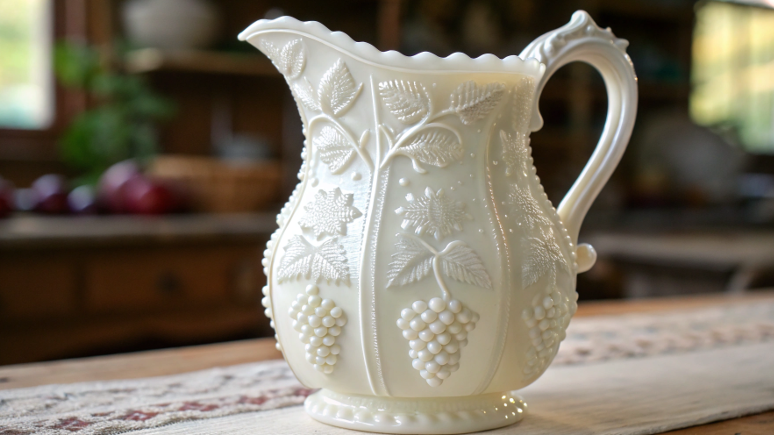
When I help a client build a product line, we always talk about creating a "signature" design that becomes synonymous with their brand. Westmoreland Glass Company perfected this with their Paneled Grape motif. This wasn't just a simple design; it was a showcase of their skill. The pattern is incredibly detailed, with realistic bunches of grapes and textured leaves raised against smooth, recessed panels. It required complex and precisely made molds, and the final product was consistently high-quality. This is why collectors love it. While other Westmoreland patterns like "Beaded Grape" or their hand-painted floral pieces are also desirable, Paneled Grape is their masterpiece. Finding a large, undamaged piece is a true thrill for any collector. Always check the bottom for the intertwined "WG" mark, used on pieces made from the 1940s until the company closed in the 1980s.
Conclusion
Milk glass is a timeless classic making a huge comeback. Its value ranges from affordable to highly collectible, but its real worth lies in its versatile style that brings a soft, elegant glow to any space.