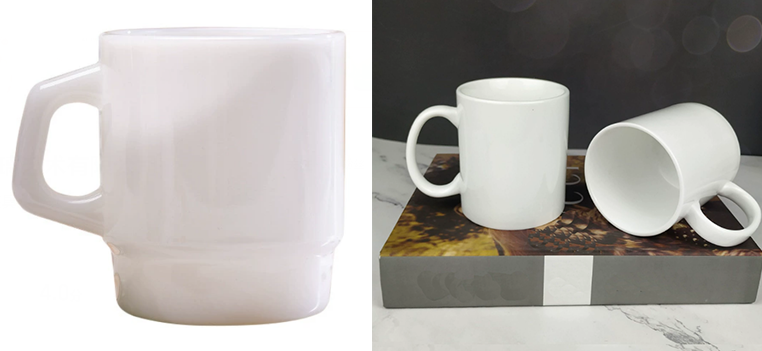
You see that beautiful, opaque white glass in vintage shops and design magazines. It looks like porcelain but feels like glass, and you wonder what it is and why it's so captivating.
Milk glass is a type of opaque or translucent glass, primarily white, made by adding agents that scatter light, such as tin dioxide or bone ash, to a molten glass formula. This additive gives it the distinctive milky-white appearance that mimics fine porcelain.
A few years ago, I was at a flea market, searching for inspiration for new textures and finishes for my tumbler business. My eyes landed on this stunning vase. It was pure white, with intricate patterns, but it wasn't ceramic. It had a unique glow. The seller told me it was "milk glass." As someone whose career is built on understanding materials like coated ceramics and stainless steel, I was fascinated. It started a deep dive for me. I wanted to understand how this material, which seemed so delicate, was made and why it had such a lasting appeal. It reminded me that the principles of creating beautiful, durable products are universal, whether it's a modern sublimated mug or a cherished antique.
Is That Old Milk Glass Dinnerware Actually Worth Anything?
You found a box of your grandmother's white glass plates and bowls in the attic. You're not sure if you should use them, sell them, or just donate them.
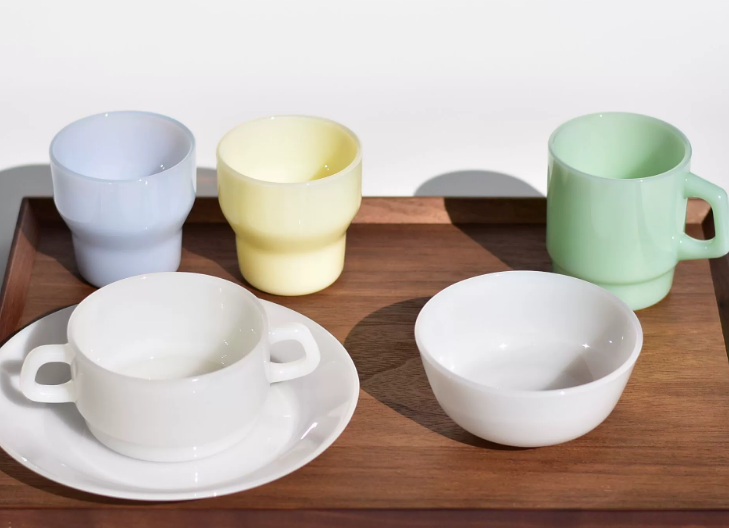
The value of milk glass dinnerware depends entirely on the maker, pattern, rarity, and condition. Common sets from Anchor Hocking's Fire-King line are plentiful and not very valuable. However, rare, complete sets or individual serving pieces in mint condition can be worth a surprising amount.

In my world of custom printing, the brand mark on a product can be the difference between a generic item and a premium one. The same is true for milk glass. Turning over a plate to find a maker's mark is the first step for any collector. For a designer like Emma, understanding these details is key to recognizing quality and value. Mass-produced dinnerware, especially from the mid-20th century, was made to be affordable and durable, so a lot of it survived. That's why individual plates or cups are often found for just a few dollars. The real value comes from scarcity. A complete 12-person serving set in a less common pattern is much harder to find than a single mug. Special promotional items or limited-run serving platters are where the higher prices are. Condition is also critical; chips, cracks, or discoloration from dishwasher use can make a piece almost worthless.
Is All White Glass Considered Milk Glass?
You see a white vase at a modern home decor store that looks a lot like the vintage pieces you've seen. You wonder if it's the same thing, or if "milk glass" is a specific category.
No, not all white glass is true milk glass. True milk glass is opaque because of specific opacifying agents mixed directly into the molten glass. Much of the modern white glass is simply clear glass that has been painted or coated, which lacks the same depth and quality.

This distinction gets right to the heart of what I do: material science. When I develop coatings for sublimation tumblers, the formula of the coating itself is everything. It determines the color, durability, and final look. It's the same with milk glass.
The Science of Opacity
True milk glass gets its color from the inside out. Tiny particles of an opacifier, like tin dioxide or bone ash, are suspended within the glass itself. When light enters the glass, it hits these particles and scatters in all directions instead of passing straight through. This is what creates that signature soft, milky glow. You can feel the quality—the color is deep and integral to the piece.
Modern Imitations
Modern, mass-market "white glass" often takes a shortcut. Manufacturers will take a standard clear glass vase and simply spray it with an opaque white coating. From a distance, it looks similar. But up close, you can tell the difference. The color sits on the surface and can sometimes scratch or chip off. It doesn't have the same luminous quality because light isn't scattering through the material. For a skilled designer like Emma, recognizing this difference between an integral material property and a surface treatment is a fundamental part of product CMF (Color, Material, Finish) analysis.
What Makes Milk Glass So Enduringly Popular?
You see milk glass featured in modern minimalist homes, rustic farmhouse decor, and everything in between. You wonder why this one material has such timeless style and versatility.
Milk glass is special because it uniquely blends the pure, refined look of porcelain with the durability and light-catching quality of glass. Its neutral white color and variety of textures make it a versatile design element that complements almost any style.

The magic of milk glass is its design flexibility. It acts as a perfect neutral. The crisp white color brightens any space without clashing with other colors. But unlike a plain white ceramic vase, milk glass has a depth and luminosity that a solid surface lacks. Light plays through it in a beautiful way. This is why designers, like Emma, keep coming back to it. Historically, it originated in 16th century Venice as an affordable way to imitate the wildly expensive and sought-after Chinese porcelain. It was the "porcelain for the people." This dual identity—being both elegant and accessible—is key to its charm. It can be a simple, clean accent in a modern room, or its intricate patterns (like the famous hobnail or grape designs) can add a touch of nostalgia and texture to a more traditional or eclectic space. It inspires me to think about how we can create products today that have that same mix of great design, good quality, and broad appeal.
Why Is It Called "Milk Glass" Anyway?
The name "milk glass" seems pretty obvious. But you're curious if there's a more technical reason or a historical story behind the simple, descriptive name.
It's called milk glass simply because its most famous and common form is an opaque white glass that closely resembles the color and milky translucency of a glass of milk. The name is a straightforward, descriptive term that caught on and stuck.
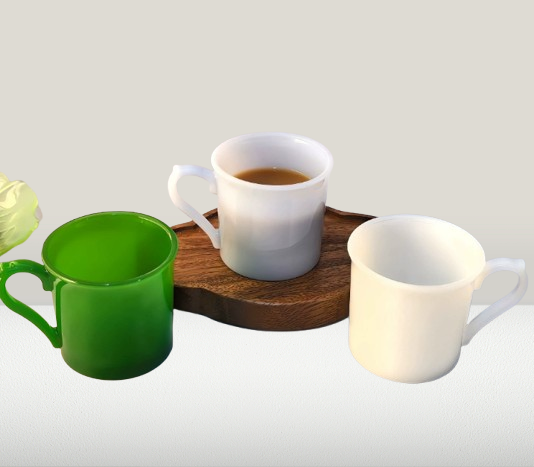
Sometimes the simplest answer is the right one, and that's the case here. The term became widely used in the 19th and early 20th centuries when this type of glass was at its peak of popularity for household items. Before then, it was often referred to by more technical or regional names, such as "opal glass" or "opaline." But "milk glass" was the name that consumers understood and used, so it became the standard. What's interesting for a product person like me is thinking about branding. The name itself is a perfect product description. It's easy to remember and perfectly conveys the look of the material. However, it's also a bit limiting. While we call it milk glass, the same technique was used to create opaque glass in a beautiful range of other colors, including a soft blue (Delphite), pale green (Jadeite), pink, yellow, and even black. These colored versions are highly sought after by collectors, but the term for the entire category remains tied to that original, iconic white.
Conclusion
Milk glass is a beautiful blend of art and science. Its unique composition creates a timeless, versatile material that continues to capture the hearts of collectors and designers around the world.