You grab your favorite mug every morning without a second thought. But have you ever wondered what it's made from, and if it's truly the best or safest choice for your daily coffee?
Most mugs are made from some type of ceramic, like earthenware, stoneware, or porcelain. However, mugs also come in a variety of other materials, including glass, stainless steel, enamel, and even plastic, each with different properties.
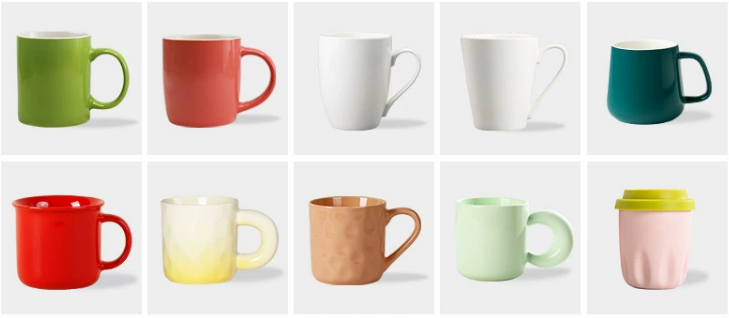
When I first started in this industry, a mug was just a mug. Now, it’s so much more. People don't just want a container for their drink; they want something that is safe, durable, and expresses their personal style. As consumer awareness about health and quality has grown, the questions my clients ask have gotten much more detailed. They want to know about material safety and performance. This is why a designer like Emma needs to understand the differences. It's not just about aesthetics anymore; it's about making a responsible choice that balances design, function, and the health of the end-user.
What Are the Most Common Materials Used for Mugs?
You see mugs that look and feel very different. You want a simple overview of what materials are out there and what makes each one unique.
The most common materials are ceramics (earthenware, stoneware, porcelain), glass, and stainless steel. Each offers a different balance of heat retention, durability, weight, and suitability for printing, like sublimation.
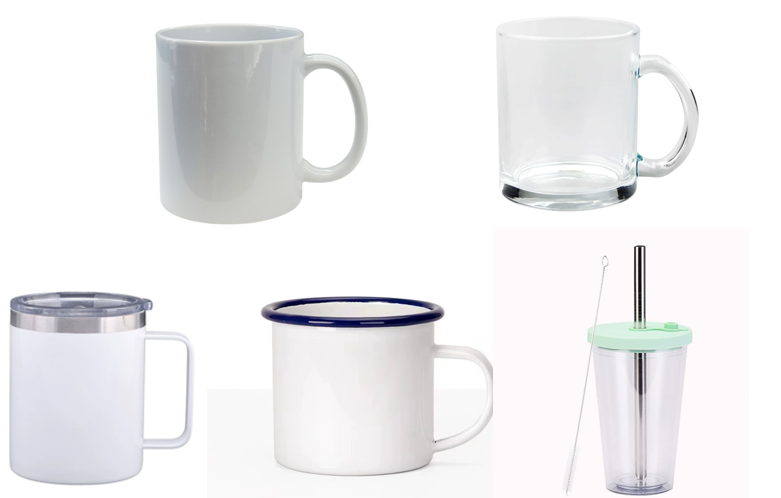
In the factory, I've handled just about every type of mug you can imagine. The variety is huge, and each one has its purpose. The vast majority of mugs fall into the broad category of ceramic. This includes everything from thick, rustic earthenware to fine, elegant bone china. Then you have glass mugs, which are non-porous and won't stain but don't hold heat very well. For durability and travel, stainless steel is the champion; it's nearly indestructible and, when vacuum-insulated, offers the best heat retention by far. You also find enamel mugs—a steel core coated in enamel—which are lightweight and durable, giving them a retro, campfire feel. Finally, there are plastic mugs, often used for travel or for kids due to being lightweight and shatterproof, though concerns about taste and chemical safety are common. Choosing the right one is about matching the material to the user's lifestyle.
| Material | Key Characteristics | Best For |
|---|---|---|
| Ceramic | Good heat retention, versatile design, classic feel. | Everyday home and office use. |
| Glass | Non-staining, visually appealing, inert. | Showcasing drinks like lattes or tea. |
| Stainless Steel | Extremely durable, excellent insulation (if double-wall). | Travel, commuting, outdoor activities. |
| Enamel | Lightweight, shatter-resistant, retro aesthetic. | Camping, picnics, rustic kitchens. |
Do All Ceramic Mugs Contain Dangerous Lead?
You hear worrying stories about lead in old ceramic glazes. It makes you nervous about your favorite mug, wondering if it could be slowly leaching harmful chemicals into your morning coffee.
No, modern ceramic mugs made by reputable manufacturers do not contain harmful levels of lead. Strict regulations in countries like the U.S. (e.g., California Prop 65) require that any food-contact ceramicware be lead-free or have lead levels far below dangerous thresholds.

This is a serious concern, and one I take very seriously in my business. Historically, lead was used in ceramic glazes to create bright colors and a smooth, glossy finish. The danger comes when the glaze is not fired at a high enough temperature, allowing the lead to potentially leach into acidic drinks like coffee or tea. However, the world is very different today. I work with suppliers who must provide safety certifications that prove their products meet stringent international standards. Commercially produced mugs sold in major retail markets today are overwhelmingly safe. The risk is primarily with handmade pottery from unknown artists, old or antique ceramics, or mugs imported from countries with lax regulations. If you buy your mugs from a known brand, the chances of them containing dangerous lead are extremely low. It's one of the reasons that as a business owner, I will only source from certified factories.
What Is the Overall Best Material for a Coffee Mug?
With so many choices, you feel stuck. You just want to know which material is the hands-down "best" for enjoying your daily coffee or tea without compromise.
There is no single "best" material; it depends on your priorities. Porcelain is often best for taste and heat retention at home, while insulated stainless steel is best for travel and durability.
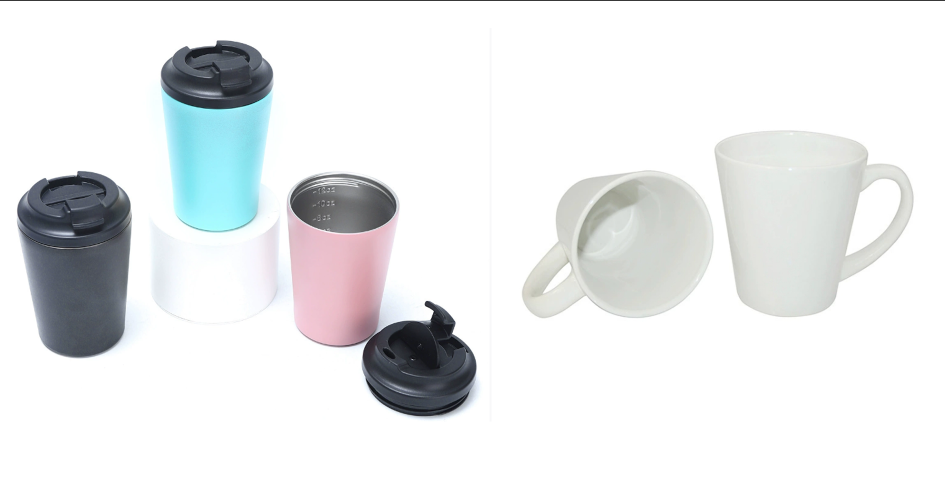
"What's best?" is a question I get all the time, and my answer is always, "It depends on what you need it to do." Let's break it down by use case. If you are a coffee enthusiast who wants the purest taste experience and wants to keep your drink warm at your desk, porcelain is a fantastic choice. It's less porous than other ceramics, so it doesn't absorb flavors, and it has great heat retention. If you're a busy commuter who needs a drink to stay hot for hours and survive a life on the go, nothing beats a double-wall vacuum-insulated stainless steel travel mug. It’s the king of performance and durability. If your main concern is aesthetic and you love seeing the layers in a latte, a glass mug is perfect. And if you're a sublimation designer like Emma looking for the most popular, cost-effective, and versatile option for custom printing, the classic stoneware ceramic mug is the industry standard for a reason. The best mug is the one that fits seamlessly into your life.
How Can You Tell the Difference Between Ceramic and Porcelain?
You see two white mugs that look almost identical. You want to know the simple tricks to distinguish the more refined porcelain from the standard ceramic it’s often confused with.
You can tell them apart by three things: translucency, thickness, and sound. Porcelain is thinner, somewhat translucent when held to light, and makes a high-pitched "ping" when tapped. Standard ceramic is opaque, thicker, and makes a dull "thud."
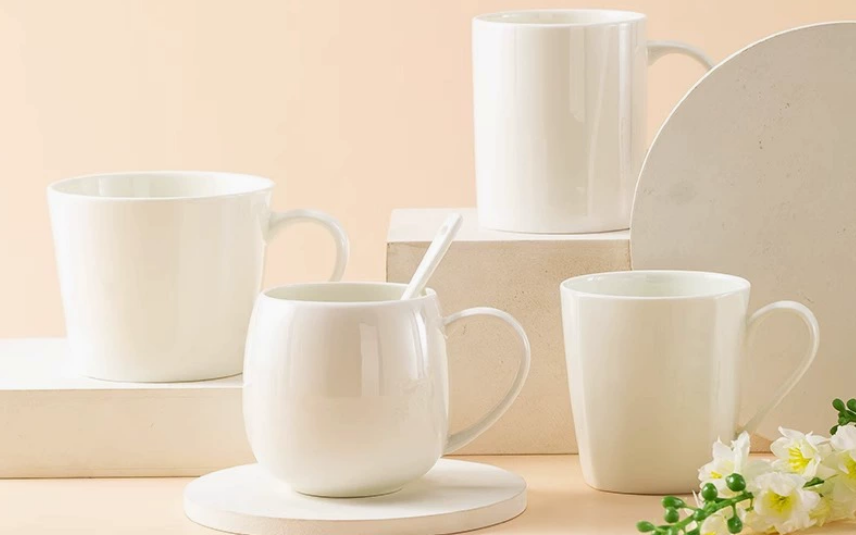
This is a great hands-on tip I learned when I was first inspecting inventory on the factory floor. It feels like a small detail, but it speaks to the quality of the material. The first test is light. Hold the mug up to a bright window or a lamp. If you can see the shadow of your fingers through the wall of the mug, it’s almost certainly porcelain. Standard ceramic is completely opaque. The second test is weight and thickness. Run your finger along the rim. Porcelain can be fired at higher temperatures, making it stronger and allowing it to be molded into thinner, lighter forms. A standard ceramic mug will feel thicker and heavier in comparison. The final test is sound. Gently tap the rim of the mug with your fingernail. Porcelain will produce a clear, high-pitched ringing or "pinging" sound. A stoneware ceramic mug will produce a much lower, duller "thud." These simple tricks can help you identify material quality instantly.
Conclusion
The best mug is a personal choice based on your needs for safety, durability, and style. From pure glass to durable steel, understanding the material helps you choose the perfect one for your life.