You see "ceramic" on product descriptions everywhere, but the term feels vague. This makes choosing the right, most durable material for your brand's mugs feel like a risky guess.
Ceramic mugs are made from clay that is fired at high temperatures. The three main types are stoneware, earthenware, and porcelain. Durable stoneware is the most common choice for the classic, everyday coffee mug.
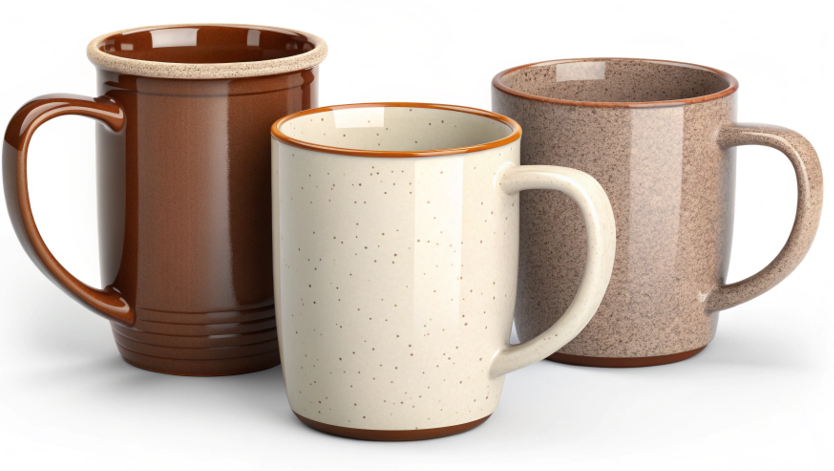
Early in my career, a client asked for a "simple ceramic mug." I quickly learned that nothing about it is simple. The type of clay, the firing temperature, the glaze—each detail radically changes the final product's feel, durability, and cost. Understanding these differences is not just academic; it's the fundamental knowledge that separates a successful product developer from one who makes costly sourcing mistakes. Knowing what a mug is truly made of is your first step to creating a great one.
What are the disadvantages of ceramic mugs?
You love the classic, comforting feel of ceramic. But you constantly worry about potential customer complaints about chipping, cracking, or the mug getting too hot, holding you back from investing confidently.
The main disadvantages of ceramic mugs are their brittleness, making them prone to chipping and shattering on impact. They are also heavier than other materials and lower-quality versions can crack from sudden temperature changes (thermal shock).
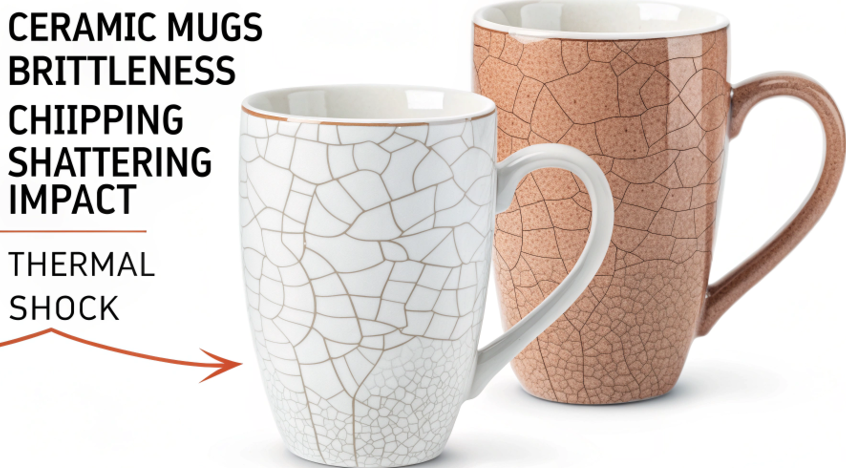
The first batch of sample mugs I ever sourced included a few from an unvetted factory. They looked great, but the first time I poured hot coffee into one, I heard a faint ping and saw a thin crack spread across the glaze. This is called thermal shock. It's a classic sign of low-quality earthenware. It taught me a vital lesson: a mug's biggest disadvantage isn't its material, but poor manufacturing. A well-made stoneware or porcelain mug is incredibly reliable. Your job as a developer is to ensure you're only sourcing the good ones.
A Realistic Look at Ceramic's Weak Points
For a product developer like Emily, knowing the potential pitfalls is key to mitigating them.
| Disadvantage | Description | How to Mitigate |
|---|---|---|
| Brittleness | Ceramic is hard but not flexible. It will chip or shatter if dropped on a hard surface. | Choose higher-fired ceramics like stoneware or porcelain, which are more durable. |
| Thermal Shock | Sudden temperature changes (e.g., cold mug + boiling water) can cause cracking in low-quality ceramics. | Source from reputable factories that use quality materials and proper firing. |
| Weight | Ceramic is naturally heavier and bulkier than plastic or stainless steel. | Market it for home/office use, not for travel. Position its weight as a feature. |
| Porosity | If the glaze is imperfect, porous earthenware beneath can absorb liquids, stains, and odors. | Ensure the glaze is fully vitrified and provides complete coverage. |
While ceramic is not as indestructible as stainless steel, its disadvantages are manageable. By choosing high-quality stoneware or porcelain, you minimize the risks of thermal shock and chipping. The weight itself can be a positive attribute, giving the mug a substantial, high-quality feel that customers often associate with comfort and warmth.
How can you tell if a mug is ceramic or porcelain?
Suppliers often use "ceramic" and "porcelain" as if they are the same thing. This makes it impossible to know if you're getting the premium, elegant material you paid for or just a standard product.
Porcelain is a type of high-end ceramic. You can tell it apart by its weight, appearance, and translucency. Porcelain is lighter, thinner, and whiter, and it will often appear translucent when you hold it up to a light source.
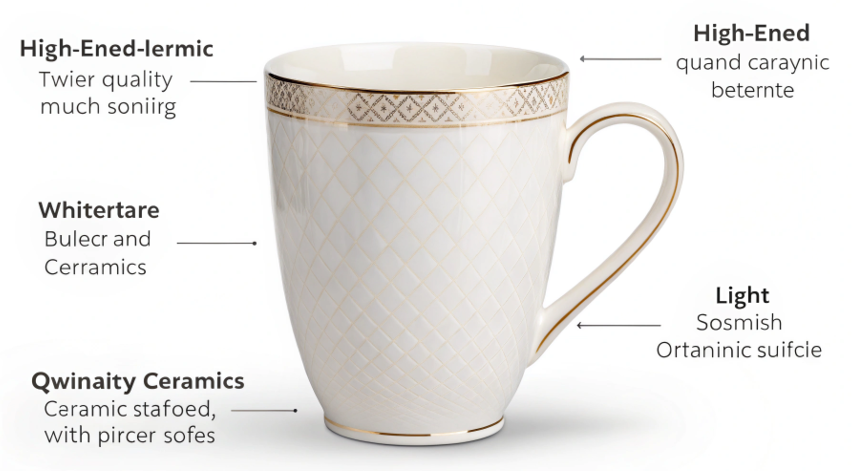
When I train new product developers, I teach them a few simple, hands-on tests. One of my favorites is the "light test." We take a porcelain mug and a regular stoneware mug into a dark room and hold a phone's flashlight inside each one. The stoneware mug remains completely dark, but the porcelain one glows softly from within. This simple demonstration instantly shows the difference. It's these kinds of physical properties that define a material and allow an expert to identify quality instantly.
The Developer's Identification Guide
Learning to spot the differences is a critical skill for sourcing. Here are three tests you can perform.
- The Light Test: This is the most definitive test. Hold the mug up to a bright window or place a small light inside it. Porcelain's fine kaolin clay composition allows light to pass through, giving it a translucent quality. Stoneware and earthenware are completely opaque.
- The Sound Test: Gently tap the rim of the mug with your fingernail. Porcelain has a high density, which produces a high-pitched, resonant, almost bell-like "ping" sound. Stoneware, being less dense, will produce a duller, lower-pitched "thud."
- The Look-and-Feel Test: Examine the mug closely.
- Color: The body of porcelain is naturally a bright, pure white. Stoneware is often a more earthy gray or brown color underneath its glaze.
- Weight & Thickness: Because it's so strong, porcelain can be made much thinner and lighter than stoneware while remaining durable. It feels more delicate and refined in the hand.
Do ceramic mugs leach chemicals?
You hear persistent, scary rumors about lead and other chemicals in ceramic glazes. This creates a deep-seated fear that you could unknowingly be selling a product that is unsafe for your customers.
No. Modern ceramic mugs produced by reputable manufacturers do not leach chemicals. They are legally required to meet strict safety standards, such as those from the FDA and California's Prop 65, ensuring they are lead-free and non-toxic.

The fear of lead is not unfounded; it's just outdated. Decades ago, lead was a common ingredient for creating bright, stable glazes. But today, the entire global industry has shifted. I have toured dozens of factories, and safety compliance is their top priority, not just for ethics, but for survival. A single failed test could ruin their business. The danger isn't in ceramic as a material. The danger is in sourcing from unknown, unvetted suppliers who operate outside these regulations. Your job is to stay within the safe, regulated system.
Your Guide to Ensuring Ceramic Safety
As a product developer, you are the gatekeeper of safety. Here's how you ensure every mug is safe.
The key is realizing that safety isn't a property of the material alone; it's a result of a controlled process. The ceramic body is just clay. The safety is in the glaze, which is essentially a layer of glass fused to the surface. When a modern, lead-free glaze is fired at the correct temperature (over 2000°F), it vitrifies. This process turns it into a solid, inert, non-porous barrier between the mug and the liquid. It cannot leach chemicals because it is chemically stable.
Your role is to verify this process.
- Demand Documentation: Never accept a factory's word. Require third-party lab test reports for every production run.
- Know the Standards: Be familiar with FDA standards and, more stringently, California's Proposition 65. This ensures you are meeting the highest safety benchmarks.
- Trust But Verify: Work with trusted suppliers who have a long track record of compliance, but continue to demand the paperwork. This diligence protects your customers and your brand.
What is the healthiest cup to drink from?
You want to offer the absolute healthiest option, but every material seems to have pros and cons. The conflicting information is paralyzing and makes it hard to create a clear marketing message about safety.
Glass is technically the healthiest cup to drink from due to its pure, inert nature. However, high-quality, certified lead-free ceramic and food-grade 18/8 stainless steel are equally non-toxic and are considered just as safe.
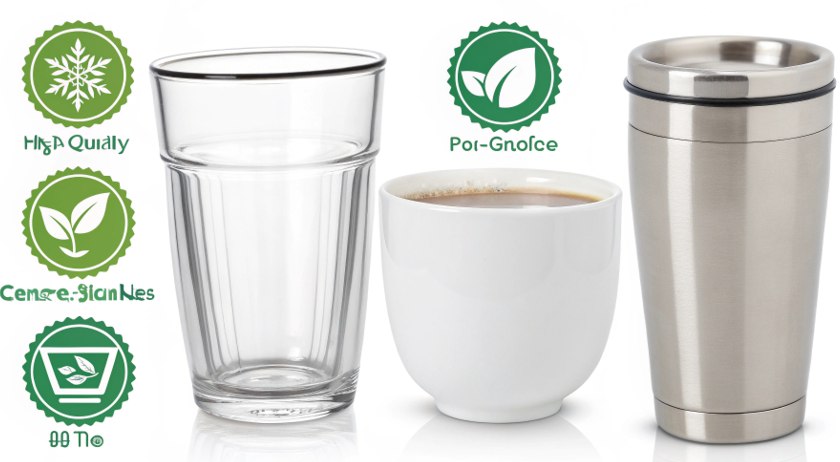
I always explain health as a baseline, a non-negotiable entry ticket into the market. It's not a feature you add; it's the foundation of the entire product. While glass is the theoretical ideal because it's safe by its very nature, it's not always the most practical choice. A well-made ceramic mug is just as safe from a chemical standpoint. The focus for a product developer shouldn't be a battle of "which material is healthier?" but rather, "how do I guarantee my chosen material is manufactured to the highest safety standard?"
The Tiers of Healthy Materials
Think of health and safety in terms of how it is achieved.
- Tier 1: Inherently Safe - Glass
Glass is made from sand and other natural minerals. It is born safe. Its chemical structure is non-reactive and non-porous. It doesn't need a special coating or process to be food-safe. This is why it's the benchmark material for laboratories. Its only health risk is physical (breaking). - Tier 2: Safe Through Process - Ceramic & Stainless Steel
These materials achieve their top-tier safety status through excellent manufacturing.- Ceramic: Becomes 100% safe when a modern, lead-free glaze is applied and fired correctly. The process creates an inert, glass-like surface.
- Stainless Steel: Becomes safe when the correct alloy, 18/8 food-grade steel, is used. This specific blend of iron, chromium, and nickel is stable and resists corrosion from acids in coffee or juice.
For a developer like Emily, this means the 'healthiest' cup is one that comes from a factory you trust, with the paperwork to prove its quality and safety.
Conclusion
Ceramic mugs are made from fired clay, typically durable stoneware. While they can chip, mugs from a reputable source with certified lead-free glaze are a beautiful, versatile, and completely safe choice for any drinkware line.