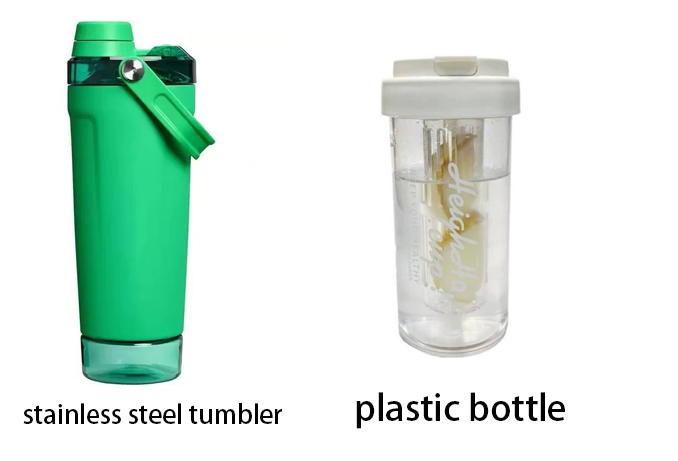
You see plastic bottles everywhere because they are cheap and light. But you also hear worrying things about chemicals like BPA. You wonder if paying more for a stainless steel bottle is truly a healthier choice.
Without question, stainless steel is healthier than plastic for daily use. Food-grade stainless steel is inert and does not leach chemicals into your water. In contrast, many plastics, even those labeled "BPA-free," can release other potentially harmful compounds over time.
I remember when I was just starting my business, a client wanted 5,000 custom bottles for a big promotional event. They wanted the cheapest option, which was plastic. I could have just taken the order, but my experience from the factory floor made me pause. I knew how plastic reacts to heat and wear. I sat down with the client and explained that while plastic was cheaper upfront, a quality stainless steel bottle would represent their brand better. It would be a gift people used for years, not something they threw away. It was a risk, but they listened. This taught me that my job isn't just to print on things; it's to help people make the best choice for their brand and their customers' well-being.
Is It Better to Drink Water from Stainless Steel or Plastic?
You need a bottle for daily use, from your commute to the gym. Plastic is lightweight and cheap, but stainless steel feels premium and safe. You just want to know which one is better overall.
It is significantly better to drink from stainless steel. Stainless steel offers superior durability, temperature control, and health safety. It doesn't absorb flavors or odors, providing a clean taste every time, unlike plastic which can degrade and hold onto old tastes.

When a designer like Emma is developing a product, the user's daily experience is everything. Let's think about that. Plastic's main advantage is its low cost and light weight. That's it. But stainless steel wins in almost every other category that matters for long-term use. First, there's durability. A plastic bottle gets scratched easily, and if you drop it, it can crack and leak. A stainless steel bottle might get a dent, but it will keep serving its purpose for years. Then there's the drinking experience itself. An insulated steel bottle keeps your water icy cold for 24 hours. Plastic can't do that. Water in a plastic bottle left in your car on a warm day is not only hot but also potentially full of leached chemicals. And we can't forget the taste. Plastic is porous, meaning it absorbs flavors. Yesterday's fruit-infused water can make today's plain water taste strange. Stainless steel has a non-porous surface, so every sip tastes pure and clean. For a premium user experience, there is no contest.
What Is the Healthiest Material for a Water Bottle?
You want to eliminate any health risks from your daily routine. With so many materials available, from plastic and metal to glass, you need to know which one is truly the safest choice.
The two healthiest materials for a water bottle are glass and food-grade stainless steel. Both are non-toxic and do not leach chemicals into your water. Between the two, stainless steel is often more practical due to its durability.
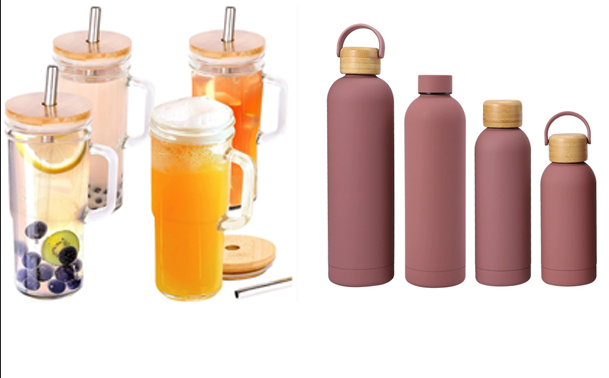
This is the most important question for any responsible product designer or consumer. My entire business is built on providing safe, high-quality products, so I've spent a lot of time on this. Here's a simple breakdown of the main options.
The Material Safety Tiers
| Material | Health & Safety Profile | My Expert Take |
|---|---|---|
| Glass | Excellent. Completely inert. Zero risk of chemical leaching. The gold standard for purity. | The safest material, but its fragility makes it impractical for many people's daily activities. Best for home or office use. |
| Stainless Steel (18/8) | Excellent. Extremely stable, corrosion-resistant, and does not leach chemicals. No liner needed. | The best mix of safety and real-world durability. The top choice for an active lifestyle. |
| BPA-Free Plastic | Fair to Poor. While free of BPA, they may contain other chemicals (BPS, phthalates) that can leach, especially with heat or wear. | I personally avoid it. The "BPA-free" label can give a false sense of security. The long-term risks are still being studied. |
| Aluminum | Poor. Reactive metal that requires a plastic or epoxy liner. If the liner is scratched, aluminum can leach into the water. | This is a hard pass for me. The reliance on a fragile inner liner makes it a risky choice. Stainless steel is far superior. |
For a designer like Emma, the choice is clear. To create a product that is both premium and undeniably safe, the materials to focus on are glass and, more practically, 18/8 food-grade stainless steel.
What Are the Disadvantages of Stainless Steel Bottles?
You are leaning towards stainless steel for its health benefits and durability. But you are a smart consumer and know that no product is perfect. What are the potential downsides you should be aware of?
The main disadvantages of stainless steel bottles are their higher initial cost, their heavier weight compared to plastic, their potential to dent if dropped hard, and the fact that you cannot see how much liquid is left inside.
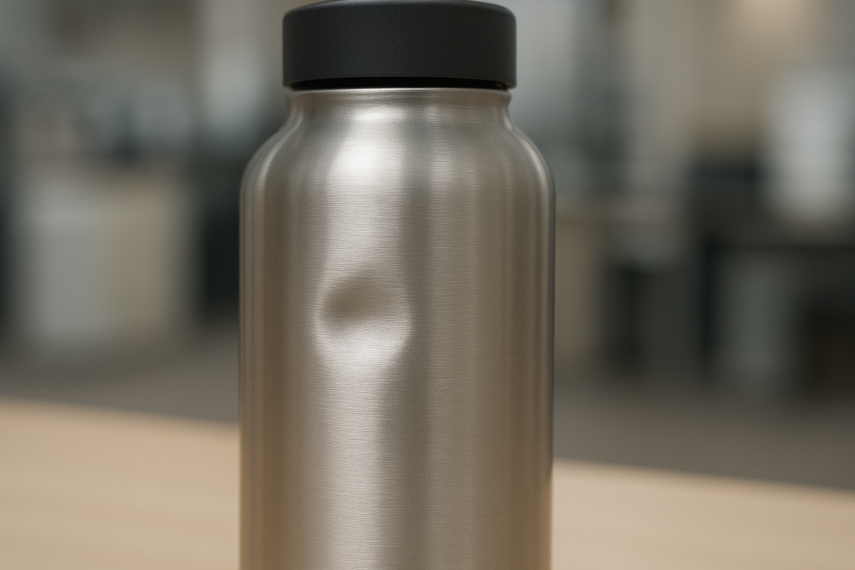
Being honest about a product's limitations is key. When I consult with clients, I never hide the trade-offs. It builds trust and helps them make a better decision. For stainless steel, the disadvantages are really the flip side of its advantages. Yes, it costs more than a plastic bottle, but that's because it's a "buy it for life" product, not a disposable one. It's an investment that saves money and reduces waste over time. It is heavier than plastic, but that weight comes from its strong, double-walled construction that provides incredible insulation. And while it can dent, that's far better than shattering like glass or cracking and leaking like plastic. The dent tells a story of its durability. The only real functional drawback is that it's opaque. You have to unscrew the cap to check your water level. For me and my clients, these minor points are easy trade-offs for the huge benefits in health, durability, and performance.
Is Stainless Steel Really Less Toxic Than Plastic?
You see "BPA-Free" on plastic bottles and wonder if that solves the problem. Is stainless steel genuinely a less toxic choice, or is the concern over plastic overblown?
Yes, stainless steel is fundamentally less toxic than plastic. Stainless steel is an inert, stable material that does not release any substances. Plastic, even BPA-free types, is a complex chemical polymer that can break down and leach microplastics and chemical additives into your water.
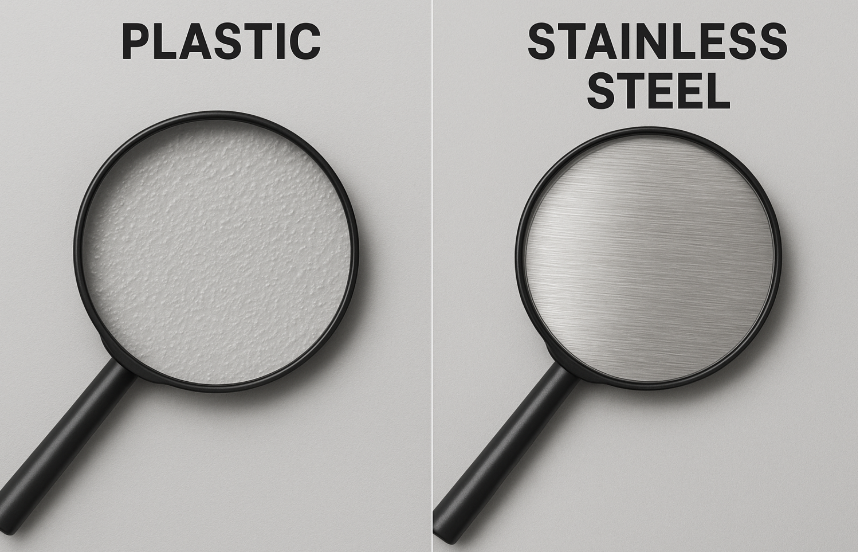
Let's get to the core of the science, in simple terms. This is crucial for a designer like Emma who needs to stand behind her material choices. Plastic is a chain of synthetic molecules. To give it different properties like flexibility or clarity, manufacturers add a cocktail of other chemicals. The problem is that these bonds are not permanent.
The Plastic Problem
When plastic is exposed to heat (like in a hot car or dishwasher), UV light, or just physical stress and age, these chemical chains break. This breakdown releases two things you don't want to drink:
- Chemical Additives: This was the original concern with BPA. But "BPA-free" plastics just use replacement chemicals like BPS or BPF, which early studies suggest may be just as harmful.
- Microplastics: The physical structure of the bottle itself sheds tiny plastic particles into your water, which you then ingest.
The Stainless Steel Solution
Food-grade stainless steel is completely different. It's a simple, stable metal alloy. It's not a chemical soup. Its surface is "passive," meaning it doesn't react with its environment. It doesn't break down, it doesn't need chemical additives, and it doesn't shed particles. There is no risk of it leaching anything into your water. It is simply a strong, clean container. From a toxicological perspective, the choice is not even close.
Conclusion
When it comes to your health, the choice is clear. Stainless steel is a safe, durable, and stable material, while plastic carries risks of chemical leaching and microplastic contamination.