Your bulk drinkware order arrives, but breakage has already erased your profit. You need a material that guarantees ROI, from shipping dock to customer hands, and delights your end-user.
For most bulk sourcing, stainless steel is superior for its durability, lower shipping weight, and zero breakage risk. Ceramic is ideal for stationary settings like cafes. Glass works for high-end, local distribution where shipping risks are minimal and brand image is paramount.
In our daily lives, stainless steel, glass, and ceramic are the top choices for sustainable drinkware. But when you switch hats from a consumer to a high-volume buyer, the decision becomes much more complex. Every material has its specific battleground. I've spent years helping partners navigate this choice, and it's not just about the product—it's about insulating your supply chain from risk while delivering maximum value. Let’s dive into the critical factors you must consider before placing your next big order.
1. Market Demand & Demographics: Which Material Drives Higher Retail Margins?
You're trying to choose a material for your next product line. You see competitors using everything, but you don't know which material resonates most with high-value customers.
Stainless steel typically drives higher retail margins due to its high perceived value, durability, and performance features like insulation. It appeals to a broad, active demographic. Ceramic and glass serve profitable but smaller niches like home goods and specialty coffee.
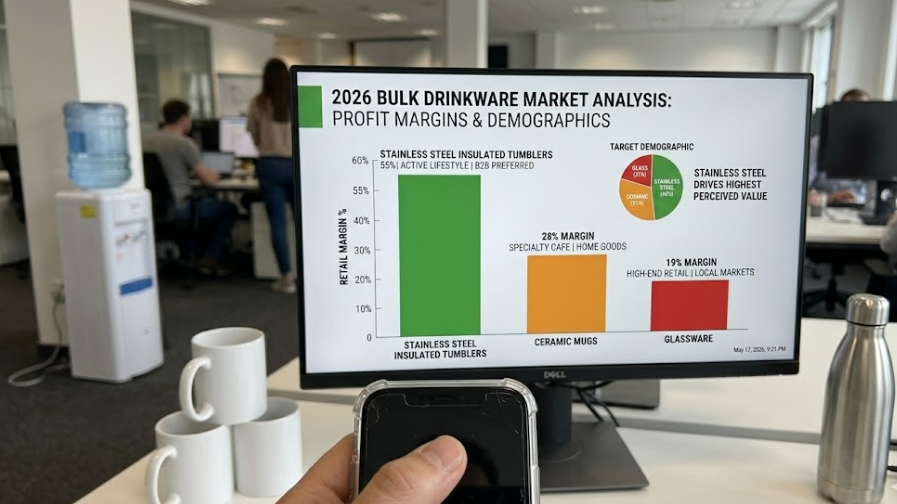
When I consult with a product developer like Emily, our first conversation is always about the target customer. Is she selling to a busy commuter, a homebody, or an outdoor adventurer? The answer determines the material. Stainless steel's versatility makes it a market leader. The ability to keep drinks hot or cold for hours is a powerful selling point that justifies a premium price. In a world where budgets are tight, customers are willing to pay more for a product that performs and lasts. Ceramic and glass mugs are excellent for corporate gifting or cafe branding, where the user experience is stationary and focused on aesthetics. They command solid margins in those contexts, but their market reach is inherently narrower than the go-anywhere appeal of stainless steel.
Matching Material to Market
Let's analyze the target demographics and their willingness to pay, a crucial step for maximizing your return on investment.
| Material | Target Demographic & Use Case | Perceived Value & Margin Potential | Strategic Insight |
|---|---|---|---|
| Stainless Steel | Active professionals, students, athletes, travelers (ages 18-55). | High. Performance (insulation, durability) justifies premium pricing. | The broadest market appeal. A safe bet for high-volume campaigns targeting a modern, mobile lifestyle. |
| Ceramic | Home users, office workers, coffee shop patrons (ages 25-65). | Medium. Valued for aesthetics and traditional feel. | Excellent for brand building in hospitality or corporate settings. Lower individual price point but strong loyalty. |
| Glass | Design-conscious consumers, specialty cafes, health purists (ages 30-50). | Niche High. Valued for purity and elegance. | Best for premium, low-volume lines. The "luxury" feel can drive high margins if the brand story is strong. |
My advice is to start with stainless steel for the widest reach and highest overall margin potential, then consider ceramic or glass for targeted, complementary product lines.
2. The Hidden Customization Limits: How Does Printing Durability Vary Across Substrates?
Your beautifully designed logo looks amazing on the sample. But you're worried it will chip, fade, or wash off after a few uses, leading to customer complaints and damaging your brand.
Stainless steel offers the most durable customization with laser engraving and powder coating. Printing on ceramic is very durable once fired, but can chip. Glass is the most challenging, as prints can scratch off easily unless specialized, costly techniques are used.
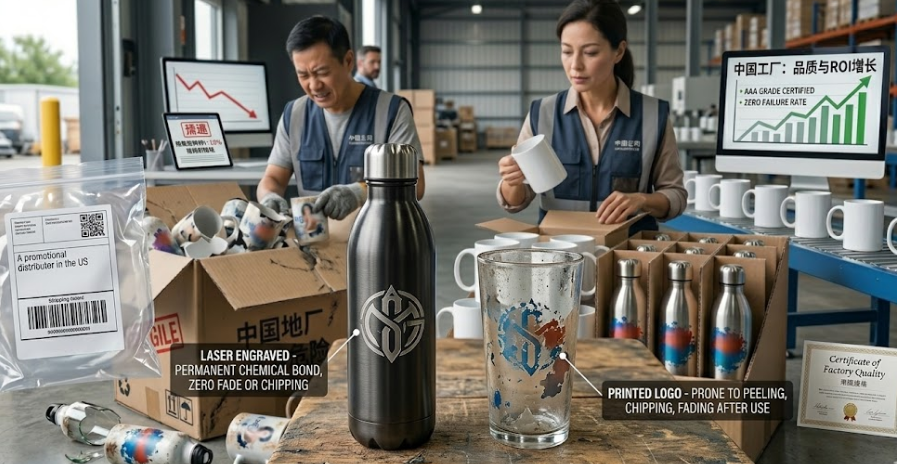
Customization is where a simple product becomes a powerful brand ambassador. But not all printing methods are created equal, and the substrate is everything. I've seen clients invest heavily in a design, only to have it fail in the real world. With ceramic, the decal is fired in a kiln, making it part of the glaze—it’s quite durable but can still be chipped off. Glass is notoriously difficult. Standard screen printing can often be scraped off with a fingernail. It requires expensive curing processes to achieve any level of permanence. This is where stainless steel truly excels. Laser engraving is literally etched into the metal; it will last as long as the bottle itself. This permanence communicates quality and longevity, reinforcing the value of your brand with every use.
A Practical Guide to Customization Durability
When planning a bulk order, the longevity of your branding is as important as the product itself.
Stainless Steel Options:
- Laser Engraving: Permanent. The most durable option. Looks premium and professional.
- Powder Coating: Extremely durable. Provides a colored, textured finish that resists chips and scratches.
- UV Printing: Good durability for full-color logos, but less resilient than engraving.
Ceramic Options:
- Decal Firing: Very durable. The design is baked into the glaze. Dishwasher safe but can be damaged by sharp impacts.
- Sublimation: Good for full-color images, but primarily works on specially-coated white mugs.
Glass Options:
- Screen Printing with Epoxy Ink: Moderately durable. Requires special inks and curing to resist washing. Still susceptible to scratching.
- Etching: Permanent, but offers no color. Similar to laser engraving but on a more fragile surface.
For a brand that needs its logo to withstand the rigors of daily life—tossed in a bag, washed repeatedly—stainless steel with laser engraving is the undisputed champion.
3. Total Cost of Ownership (TCO): How Do Shipping Breakage and Logistics Affect Your Bottom Line?
You're comparing price quotes, and the ceramic mugs seem cheaper per unit. But you have a nagging feeling that hidden costs like shipping and damage will eat away at that initial saving.
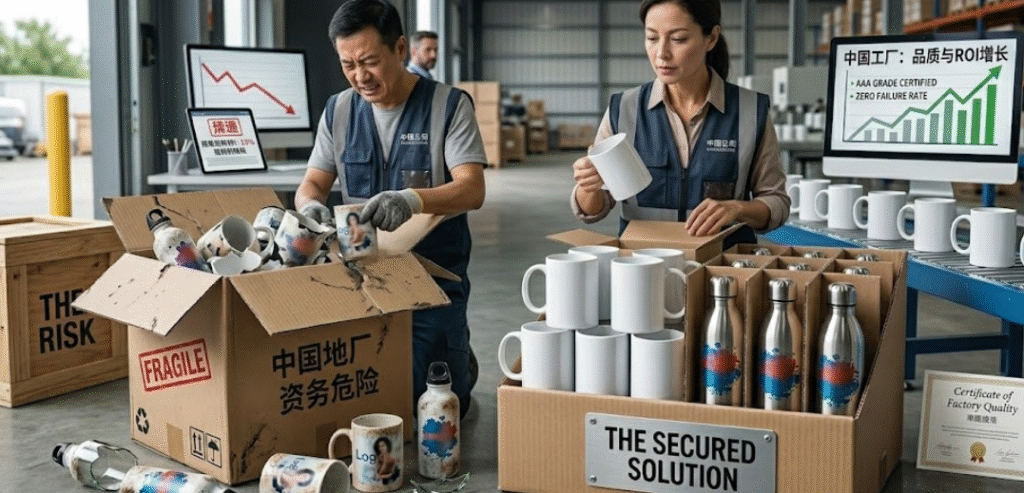
Your feeling is correct. Ceramic and glass have a high Total Cost of Ownership (TCO) due to their weight and a 5-15% average breakage rate during shipping. Lighter, indestructible stainless steel eliminates replacement costs and logistical headaches, protecting your profit margin.
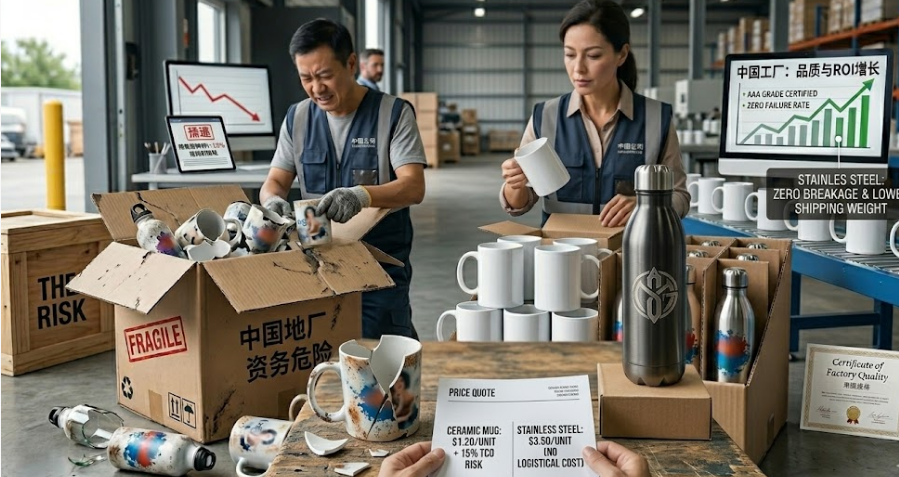
This is the most critical lesson I teach my clients: the per-unit price is not the final price. In a world of fluctuating shipping rates and unpredictable logistics, a 10% breakage rate on a container of ceramic mugs can instantly wipe out your entire campaign's profit. You have to pay for the broken units, the shipping for replacements, and manage the customer service nightmare. It's structural waste that modern businesses can no longer afford. When I ship a container of stainless steel bottles, I have zero-breakage peace of mind. They are lighter, which lowers freight costs, and they are virtually indestructible. This isn't just about choosing a bottle; it's about insulating your supply chain from volatility while giving your client a product that won't fail them.
Calculating the True Cost
Let's run a simplified scenario for a 10,000-unit order to see how quickly the "cheaper" option becomes more expensive.
| Cost Factor | Ceramic Mugs (Assume 10% Breakage) | Stainless Steel Tumblers (0% Breakage) |
|---|---|---|
| Unit Cost ($3/unit) | $30,000 | $30,000 |
| Initial Freight (Heavier) | $5,000 | $4,000 (Lighter) |
| Cost of Broken Units | $3,000 (1,000 units x $3) | $0 |
| Replacement Freight | $500 | $0 |
| Effective Total Cost | $38,500 | $34,000 |
This simple table doesn't even include the administrative costs of managing returns and the damage to your brand's reputation. When you factor in the entire supply chain, stainless steel provides a far more predictable and profitable return on investment.
Conclusion
For bulk orders, stainless steel offers the best ROI through durability, premium appeal, and lower total costs. It protects your margin from shipping risks and builds a stronger, more resilient brand.