You're developing a new mug line and face a tough choice: ceramic or glass? The wrong decision can lead to poor heat retention and unhappy customers for your brand.
For keeping drinks hot, ceramic is generally the superior choice thanks to its thicker, more porous composition which insulates better. Glass mugs, however, offer a unique visual appeal for specialty drinks and are completely non-porous, ensuring a pure, unaltered taste.
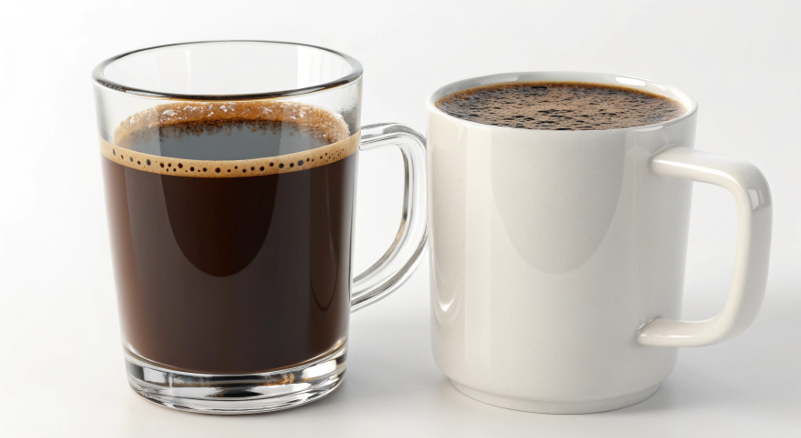
I always tell product developers like Emily that the material is the foundation of the user's experience. A customer doesn't just buy a mug; they buy the ritual of their morning coffee or evening tea. The choice between ceramic and glass completely changes that ritual. One material feels cozy and traditional, while the other feels modern and sophisticated. Before you even think about design or color, you have to decide what feeling you want your customer to have when they hold your product. Your choice here sets the entire tone for your brand.
What is the best mug for hot drinks?
You want to offer your customers the absolute best product for their daily coffee or tea. But with so many materials available, what truly makes a mug "the best"?
The best mug for hot drinks is typically made of ceramic because it excels at retaining heat. However, a high-quality borosilicate glass mug is superior for its thermal shock resistance and for visually showcasing layered drinks like lattes.

In my years in the industry, I've learned that "best" is never a simple answer. It depends entirely on the priority. When I worked on a line for a high-end coffee shop, they chose glass. Why? Because their baristas were creating beautiful latte art, and they wanted customers to see it. The visual appeal was more important than maximum heat retention. On the other hand, a brand focused on office workers might choose a thick-walled ceramic mug because their customers want coffee that stays hot at their desk. The "best" choice is the one that best serves your specific customer's needs and your brand's story.
Key Factors for Performance
To choose the "best" material, you have to break down what that really means for a hot beverage container. It's a balance of several key qualities.
- Heat Retention: This is the most obvious factor. You want a material that keeps the drink hot for as long as possible. Ceramic's natural porosity traps air, making it a better insulator than solid glass. The thicker the ceramic wall, the longer it will hold heat.
- Durability and Safety: A good mug needs to withstand daily use. This includes resistance to chipping and, crucially for hot drinks, thermal shock. Thermal shock is when a material cracks from a sudden temperature change, like pouring boiling water into a cold mug. Borosilicate glass is the champion here, engineered to handle extreme temperature shifts. Standard soda-lime glass is not.
- Taste and Purity: The material should not affect the flavor of the drink. Both ceramic (with a proper glaze) and glass are excellent in this regard. They are non-porous and won't absorb flavors or odors.
- Aesthetics and Feel: This is the emotional component. Ceramic often feels "cozy," "earthy," and "traditional." Glass feels "modern," "clean," and "elegant." The decision here comes back to the brand identity you are trying to build.
What are the disadvantages of ceramic mugs?
Ceramic seems like a safe, classic choice for hot drink mugs. But you're worried about hidden drawbacks that could lead to customer complaints or production issues down the line.
The main disadvantages of ceramic mugs are their susceptibility to chipping and breaking on impact, their potential to stain over time if the glaze is of poor quality, and the possibility of manufacturing inconsistencies in thickness and glaze application.
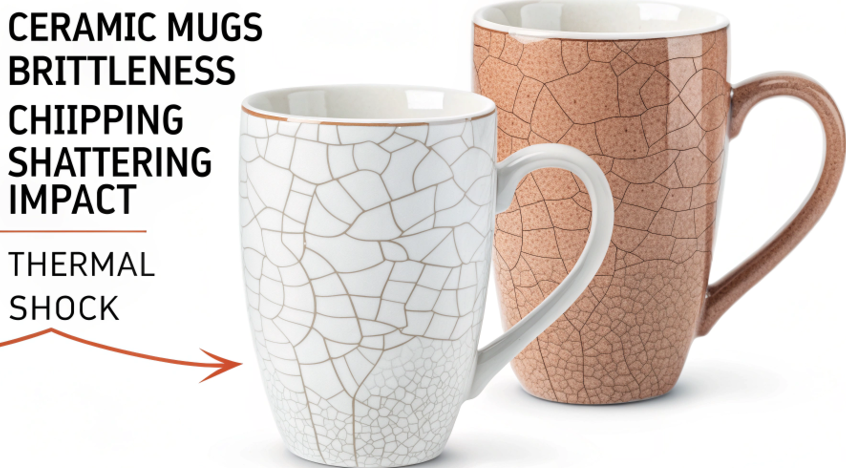
I once had a client who approved a beautiful ceramic mug sample but was shocked when the first mass production order arrived. They found that about 5% of the mugs had slightly thinner walls on one side. This is a common challenge with ceramic manufacturing. Gravity affects the clay as it's being formed and fired. It takes a skilled factory with strict quality control to ensure every mug is consistent. This is why vetting your manufacturer is so critical. A cheap price often means cutting corners on quality control, and you end up with problems like this.
A Closer Look at Ceramic's Weaknesses
For a product developer like Emily, understanding these potential issues is key to mitigating them through smart design and supplier selection.
| Disadvantage | Impact on the Consumer | Consideration for the Developer |
|---|---|---|
| Brittleness / Chipping | Mugs can chip easily on the rim or handle if knocked against a hard surface. | Choose a durable ceramic type like stoneware or porcelain. Design with thicker walls and rounded edges, which are less prone to chipping. |
| Potential for Staining | Dark liquids like coffee and tea can leave stains, especially if the glaze is crazed. | This is a quality issue. A properly applied, non-porous glaze fired at the right temperature will resist staining. Always test samples. |
| Manufacturing Inconsistencies | Mug weight, wall thickness, and color can vary slightly from piece to piece. | While some variation adds "character," too much looks like poor quality. Set clear specifications and AQL standards with your factory. |
| Lower Thermal Shock Resistance | Pouring boiling water into a very cold stoneware mug can cause it to crack. | This is less of an issue with porcelain or high-quality stoneware, but it's a key advantage that borosilicate glass has over ceramic. |
Is a ceramic mug safe for hot drinks?
You see warnings about lead and other chemicals in older dishware. This makes you rightly concerned: are modern ceramic mugs completely safe for your customers to drink hot coffee from every day?
Yes, a modern ceramic mug from a reputable manufacturer is completely safe. Safety issues like lead or cadmium leaching are prevented by using high-quality, lead-free glazes and proper firing techniques, verified by certifications like FDA and Prop 65.

Safety is the one area where there is zero room for error. The first thing I verify with any new factory partner is their material safety documentation. I ask to see their testing reports for lead and cadmium content, specifically for the glazes and pigments they use. These concerns are valid because in the past, lead was used to make glazes shiny and colors vibrant. Today, any responsible manufacturer uses modern, lead-free formulations. Your job as a developer is not just to trust, but to verify. Always ask for the paperwork.
Ensuring Mug Safety: A Developer's Checklist
Here’s what you need to understand to ensure your products are safe.
- The Role of the Glaze: The glaze on a ceramic mug is a layer of glass that is fused to the surface during firing. Its primary job is to make the mug waterproof and create a smooth, easy-to-clean surface. A properly formulated and fired glaze creates an inert, non-porous barrier between the ceramic body and the beverage.
- The Danger of Heavy Metals: Lead and cadmium were historically used in pigments (especially for bright red and yellow) and glazes. The danger arises if the mug is not fired at a high enough temperature for a long enough time. If the glaze is not fully matured, these metals can leach out, especially when in contact with acidic drinks like coffee or tomato soup.
- The Importance of Firing: Proper firing is critical. The heat of the kiln matures the glaze, making it strong and stable. It locks any potentially harmful chemicals into the glass matrix, rendering them inert. This is why you must work with factories that have modern, well-calibrated kilns.
- The Need for Certification: Don't just take a factory's word for it. You must require them to provide up-to-date testing reports from a third-party lab. These tests, like for FDA, LFGB (for Europe), or California's Proposition 65, confirm that the product meets strict safety standards for leachable lead and cadmium.
Are glass or ceramic mugs better?
You've weighed the different factors, but you still need to make a final decision for your product line. Which material will ultimately serve your brand and customers better?
Neither is universally "better"; the choice depends entirely on your brand's priorities. Ceramic is better for heat retention and a classic, cozy aesthetic. Glass is better for visual presentation, taste purity, and a sleek, modern feel.
When I consult with a brand on this choice, I always ask them one question: "What moment are you selling?" Are you selling the cozy, comforting moment of wrapping your hands around a warm mug on a chilly morning? That's ceramic. Or are you selling the chic, sophisticated moment of watching a perfect crema form on an espresso or admiring the layers in a macchiato at a stylish cafe? That's glass. The material isn't just a technical specification; it's the most important part of your brand's story.
Head-to-Head: A Product Developer's Guide
Let's put them side-by-side based on the factors that matter most to a product developer.
| Feature | Ceramic Mugs | Glass Mugs (Borosilicate) |
|---|---|---|
| 1. Heat Retention | Winner. Thicker, more porous material provides superior insulation. | Good, but generally does not hold heat as long as a thick-walled ceramic mug. |
| 2. Durability | Prone to chipping and can crack from thermal shock if it's lower-quality stoneware. | Winner. Highly resistant to thermal shock. Less prone to chipping on impact. |
| 3. Aesthetics & Customization | Huge range of glazes, textures, and rustic, traditional, or novelty shapes. | Winner for Visual Drinks. Showcases the beverage. Sleek, minimalist, modern aesthetic. |
| 4. Purity of Taste | Excellent with a proper glaze. No taste or odor absorption. | Tie. Glass is the industry standard for purity. Completely inert. |
| 5. Perceived Value | Can be perceived as classic, cozy, and substantial. | Can be perceived as modern, premium, and sophisticated, especially in cafes. |
| 6. Production Cost | Generally lower for basic stoneware designs. | Often slightly higher due to the cost of borosilicate material and processing. |
Conclusion
Ultimately, the choice between ceramic and glass mugs is a strategic one. Ceramic excels in warmth and traditional feel, while glass offers modern style and showcases the beverage within.