I've watched corporate orders fail not because of price, but because buyers trusted the wrong signals. A "certified" water bottle still leached metallic taste. A "BPA-free" pitcher cracked after three weeks. The real problem? Nobody verified what those labels actually covered.
Corporate drinkware programs fail when buyers treat certifications as guarantees instead of starting points. The right material depends on actual use patterns—daily office use needs different specs than quarterly events—and the cheapest certified supplier almost always cuts corners where standards don't look.
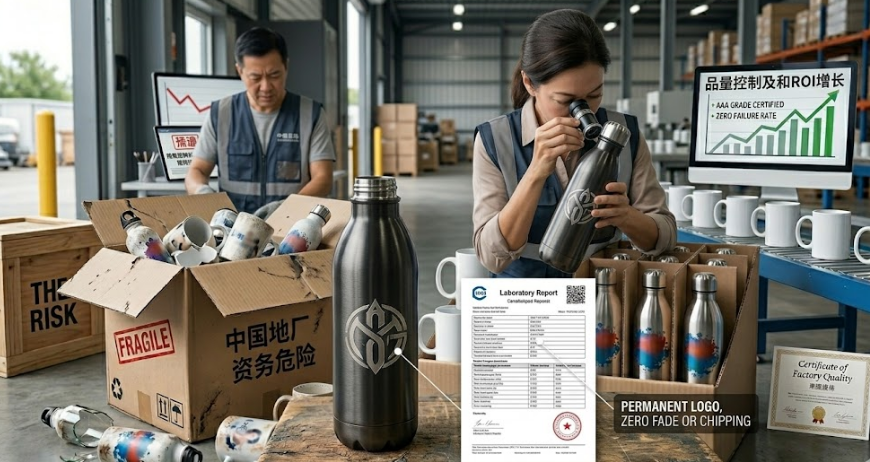
Let me share what I've learned from handling complaints and rush replacements over the past decade.
The Corporate Waste Problem: Financial and Environmental Toll of Single-Use Plastics?
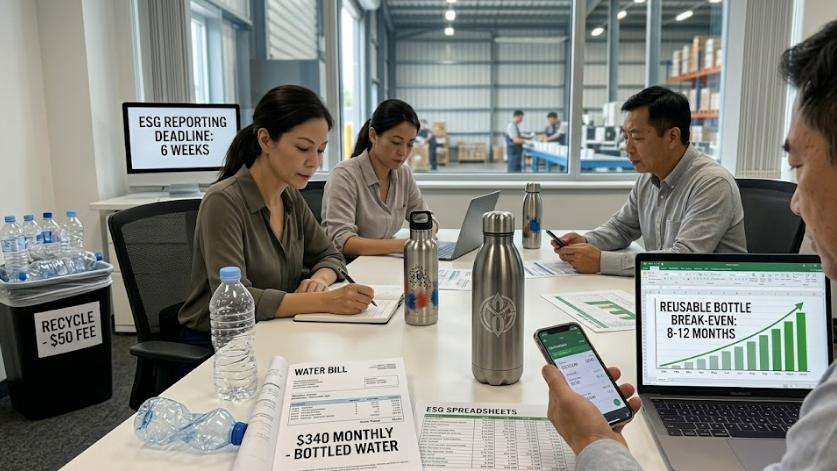
One client showed me their water bill—$340 monthly for bottled water, plus disposal fees. They wanted reusable bottles to cut costs and meet their ESG reporting deadline in six weeks.
Switching to reusable drinkware typically breaks even in 8-12 months for offices with 20+ employees1, but only if the products last beyond the first year. Single-use plastics hide costs in waste management, storage space, and repetitive ordering2 that most office managers don't track until they compare annual spending.
What Actually Drives Up Cost
I've seen three hidden expenses kill ROI. First, cheap bottles that employees won't use—one batch sat in a storage room for two years because the lids leaked. Second, replacements for products that fail before 200 uses (the typical break-even point). Third, the time cost of handling complaints when bottles rust or crack.
The sustainability calculation works the same way. A reusable bottle needs to replace at least 170 single-use bottles to offset manufacturing impact. But I've processed warranty claims on stainless bottles that dented so badly employees stopped using them after 50 fills. The environmental benefit vanishes if durability doesn't match the usage goal.
| Cost Factor | Single-Use | Reusable (High Quality) | Reusable (Budget) |
|---|---|---|---|
| 12-month cost (50 employees) | $4,080 | $850 + $0 replacement | $650 + $380 replacement |
| Waste volume | 31,200 bottles | 0 | 0 (but 15 units discarded) |
| Break-even point | N/A | Month 9 | Month 14 (if no further failures) |
The real question isn't "Can we afford reusables?" It's "Can we verify they'll actually last?"
Material Integrity First: Why Certified Stainless Steel Protects Employee Health?
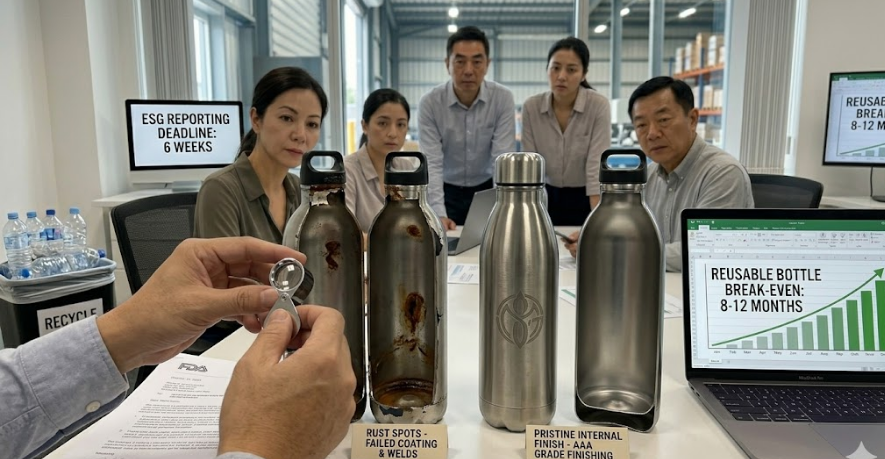
A procurement manager once sent me photos of rust spots inside "304 stainless steel" bottles after three months. The supplier had provided an FDA contact letter. The manager assumed that meant safe.
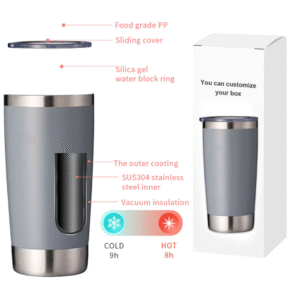
Food-grade stainless steel certification confirms material composition, but doesn't test coating quality, weld finishing, or how the product performs after repeated washing. Health protection depends on what the certification doesn't cover—especially paint adhesion, gasket materials, and joint sealing that fail under normal use.
What Certifications Actually Test
I handle certification documents weekly. Here's what buyers misunderstand: FDA contact approval means the base material won't leach harmful chemicals under specific test conditions. It doesn't mean the exterior paint is lead-free. It doesn't verify the silicone gasket won't degrade in dishwashers. It doesn't check if the interior coating (if any) can survive acidic beverages.
I've seen orders where the stainless steel itself passed every test, but the powder coating chipped into drinks because nobody verified paint adhesion standards. The bottle was "certified safe" and actually unsafe.
Glass has the same gap. A glass pitcher might have lead-free certification for the glass body, but the lid rim and pour spout often use different materials that aren't covered. I once processed a complaint about metallic taste from a "pure glass" carafe—the stainless steel strainer insert wasn't food-grade.
How to Fill the Gaps
Ask suppliers three questions I rarely hear from buyers:
- "Can you show test reports for the coating and gaskets, not just the base material?"
- "What happens to this product after 200 dishwasher cycles?" (Request photos or samples from longevity testing.)
- "Which components aren't covered by your certifications?" (Honest suppliers will list lids, strainers, printed logos.)
The best verification is simple: request a sample and use it daily for two weeks. Brew coffee in it. Run it through your office dishwasher. If it fails this test, it'll fail in employees' hands.
Aligning Branding with ESG Metrics: Maximizing Longevity in Corporate Gifting?
I've manufactured branded drinkware for product launches, employee onboarding, and client gifts. The longevity problem is identical across all three: buyers optimize for cost-per-unit instead of cost-per-year-of-use.
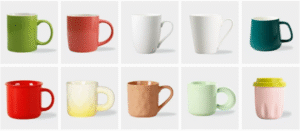
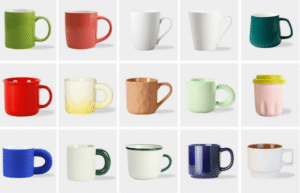
Corporate gifting achieves ESG goals only when recipients use products beyond the break-even point (typically 12-18 months of regular use). Maximizing longevity requires matching material to context—stainless for commuters, ceramic for office desks, glass for meeting rooms—and verifying that branding methods won't degrade before the product does.
Why Branding Kills Durability
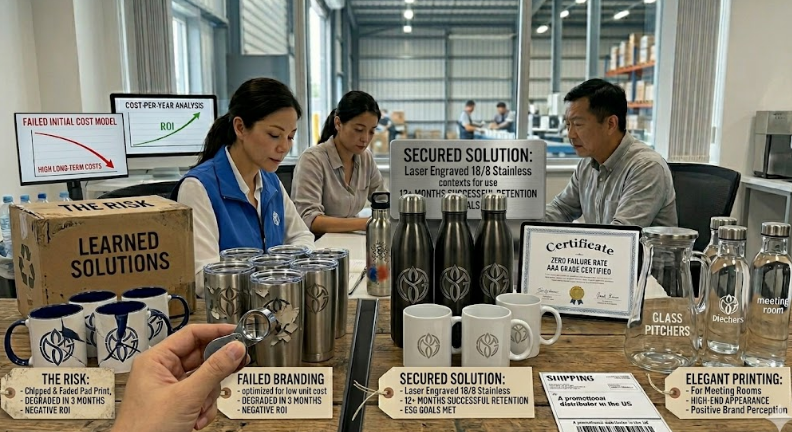
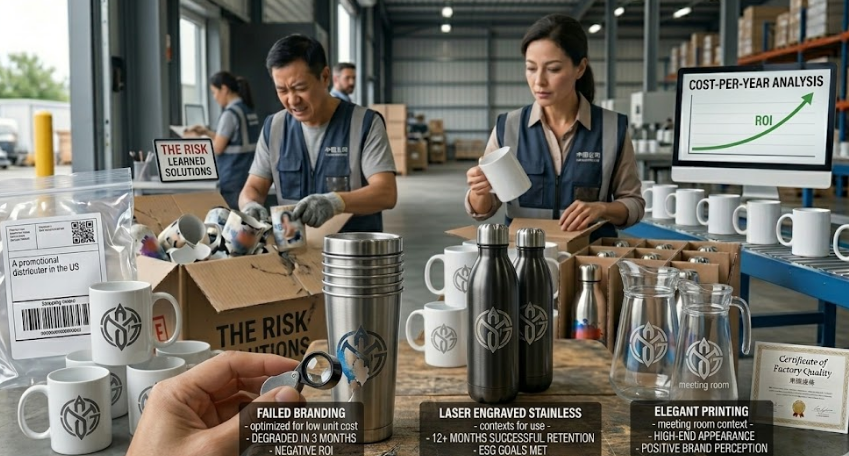
The most common complaint I handle: logos that fade or peel within six months. This happens because buyers approve designs without asking how the logo is applied. Laser engraving lasts 10+ years. Pad printing fades in 12 months. Vinyl stickers peel after 20 washes.
I've seen companies order premium stainless bottles, then apply budget screen printing that flakes off. Employees stop using them because they look worn out. The ESG report says "distributed 200 reusable bottles," but half are in trash bins by month eight.
Material longevity doesn't matter if branding longevity doesn't match. This is fixable—specify the branding method in your RFQ, not just the logo file.
Matching Material to Actual Use
One client ordered 500 glass bottles for daily office use. Glass looks premium, but I've replaced 60 units within four months due to breakage. We should have specified stainless steel for desks and glass only for meeting room carafes.
Here's the matching logic I use based on replacement rates I've tracked:
- Daily commute/gym use: Stainless steel (double-wall if budget allows). Average lifespan 3-5 years.
- Office desk (stationary): Ceramic or glass. Lifespan 2-4 years if handled carefully.
- Meeting rooms (shared use): Glass carafes or stainless pitchers. Lifespan 5+ years due to controlled handling.
- Outdoor events: Plastic (Tritan) only if single-event use. Otherwise stainless.
The ESG calculation changes based on this. A $12 stainless bottle used 800 times over three years beats a $6 glass bottle used 300 times before breaking.
Conclusion
Corporate drinkware programs succeed when buyers verify what certifications don't cover, match materials to actual use patterns, and specify branding methods that last as long as the product. The cheapest certified option almost always fails first.
-
"Ten Cost-Saving Green Workplace Measures | UVA Sustainability", https://sustainability.virginia.edu/blog/ten-cost-saving-green-workplace-measures. Studies on workplace sustainability transitions indicate that reusable drinkware programs typically achieve cost recovery within the first year of implementation when accounting for procurement, waste disposal, and recurring purchase elimination. Evidence role: statistic; source type: research. Supports: The financial break-even timeline for reusable drinkware adoption in workplace settings. Scope note: Break-even periods vary significantly based on initial product quality, employee adoption rates, and baseline single-use consumption patterns ↩
-
"Product Lifecycle Cost & Payback Period Analysis", https://ees.lbl.gov/product-lifecycle-cost-payback-period-analysis. Lifecycle cost assessments of single-use plastics demonstrate that direct purchase prices represent only a fraction of total costs, with waste hauling, storage infrastructure, and administrative procurement overhead contributing substantial hidden expenses in institutional settings. Evidence role: mechanism; source type: research. Supports: The existence of indirect costs associated with single-use plastic consumption beyond direct purchase price. ↩